
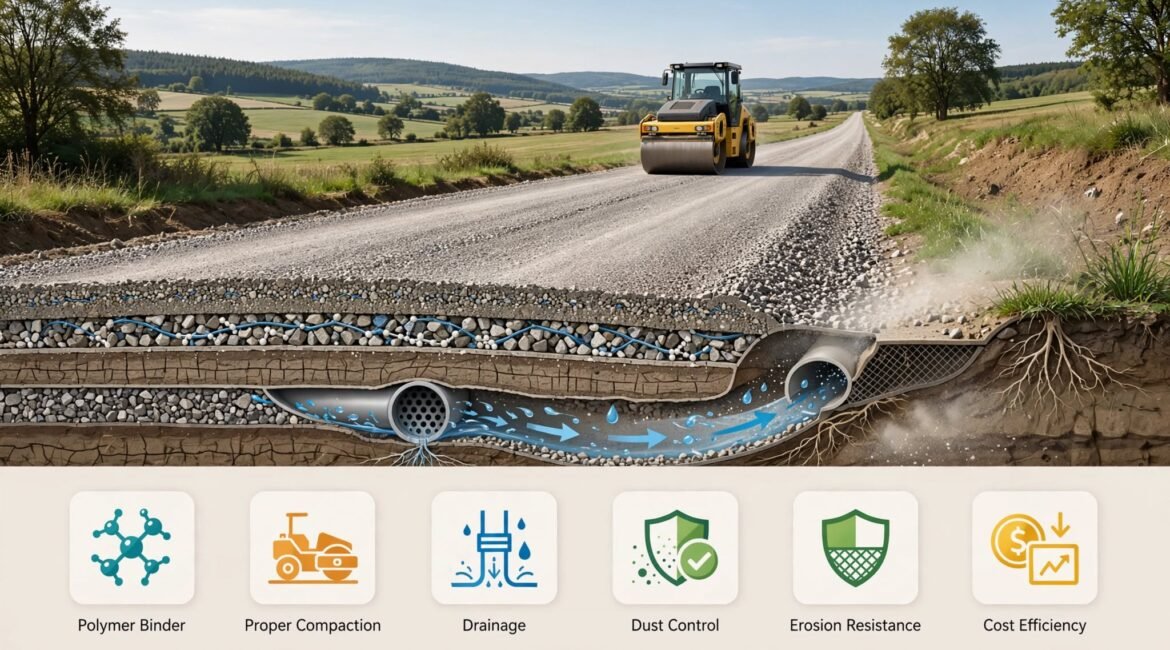
Soil Stabilizers for Gravel Roads break the endless maintenance cycle permanently. Gravel roads eat up budgets like nothing else. Crews grade them constantly. Fresh gravel gets spread every few months. Dust clouds annoy nearby residents. Rain carves ruts into surfaces that just got smoothed. The cycle never ends.
These products bind loose gravel into a stable, durable surface. The treated road resists rutting, washboarding, and dust generation. Maintenance requirements drop dramatically. Budgets stretch further. Crews finally get ahead of the work.
The six proven secrets below come from successful stabilization projects across many regions. Each secret builds on practical experience. Understanding these techniques helps road agencies achieve lasting results.
Match Stabilizer Type to Gravel Composition
Gravel composition varies enormously from one pit to another. Some gravels contain significant clay fines. Others are washed clean with almost no fine particles. The right Soil Stabilizers for Gravel Roads depend entirely on what the local material contains.
Clay-rich gravels respond well to lime stabilization. The lime reacts with clay particles to create strong cementitious bonds. Roads treated this way develop hard, durable surfaces. Lime-based stabilizers work best when adequate clay exists in the mix.
Clean gravels need different approaches entirely. Polymer products coat particles and create adhesion without requiring clay. These synthetic stabilizers work effectively on washed materials that resist other treatments. The polymer chains bridge gaps between aggregate particles.
Cement-based products perform well across many gravel types. The cement fills voids and binds everything together. Properly applied cement stabilization creates surfaces that withstand heavy traffic. Cement-based treatments require careful moisture control during application.
Testing gravel properties before selecting stabilizers prevents costly mistakes. Laboratory analysis identifies the right product for specific conditions. Skipping this step risks complete failure.
Get Application Rates Right the First Time
Application rates determine success or failure with these methods. Too little product fails to create adequate bonds. Too much wastes money without improving performance. Finding the optimal rate matters enormously.
Manufacturer recommendations provide starting points. These guidelines assume typical conditions. Actual rates may need adjustment based on local gravel characteristics. Stabilizer application should always begin with proper testing.
Laboratory testing mixes different rates with actual gravel samples. Strength testing identifies the most effective concentration. This scientific approach removes guesswork from product selection. Field trials then confirm laboratory results.
Small test sections get treated with different rates. Performance monitoring reveals the best approach for specific conditions. Full-scale application follows successful trials. Soil Stabilizers for Gravel Roads projects benefit from this methodical process.
Budget pressures sometimes lead to reduced quantities. The resulting roads fail prematurely. The supposed savings disappear when early repairs become necessary. Soil Stabilizers for Gravel Roads should never be under-applied to save money.
Mix Thoroughly Through Full Depth
Poor mixing leaves untreated pockets throughout the gravel layer. These weak spots fail under traffic loads. Potholes develop where stabilizer never reached. Proper mixing prevents these failures entirely.
Mixing equipment must match project scale. Large road projects need powerful mixing machines that process material quickly. Smaller projects may use smaller equipment. Mixing depth deserves careful attention regardless of equipment size.
Treatment must extend to the required depth. Shallow mixing leaves deeper untreated material that shifts under loads. Soil Stabilizers for Gravel Roads applied to proper depth achieve uniform stabilization throughout the layer.
Mixing speed affects distribution quality. Too fast may not achieve adequate blending. Too slow wastes time and money. Optimal mixing speed achieves thorough coverage efficiently. Experienced operators know the right pace for these projects.
Visual inspection during mixing checks for uniform color and consistency. The stabilized material should blend evenly without streaks or clumps. Testing confirms stabilizer distribution throughout the treated layer.
Control Moisture Throughout Application
Moisture content determines whether Soil Stabilizers for Gravel Roads work properly. Too dry prevents chemical reactions from proceeding. Too wet dilutes stabilizers below effective concentrations. Moisture control separates successful projects from failures.
Moisture requirements vary by stabilizer type. Lime-based products need moisture for chemical reactions. Cement-based products require water for hydration. Polymer stabilizers need moisture for proper dispersion. Each type of stabilizer has specific moisture needs.
Moisture testing should occur before application begins. Adjustments bring moisture to optimal levels before treatment starts. Ongoing monitoring ensures conditions remain appropriate throughout construction.
Water trucks add moisture when conditions become too dry. Discs and harrows help dry overly wet materials. Active management of moisture ensures proper reactions.
Weather changes may require adjustments during the work. Rain adds unwanted water. Dry weather removes needed moisture. Contractors must respond to changing conditions. Soil Stabilizers for Gravel Roads application demands flexibility.
Compact to Maximum Density
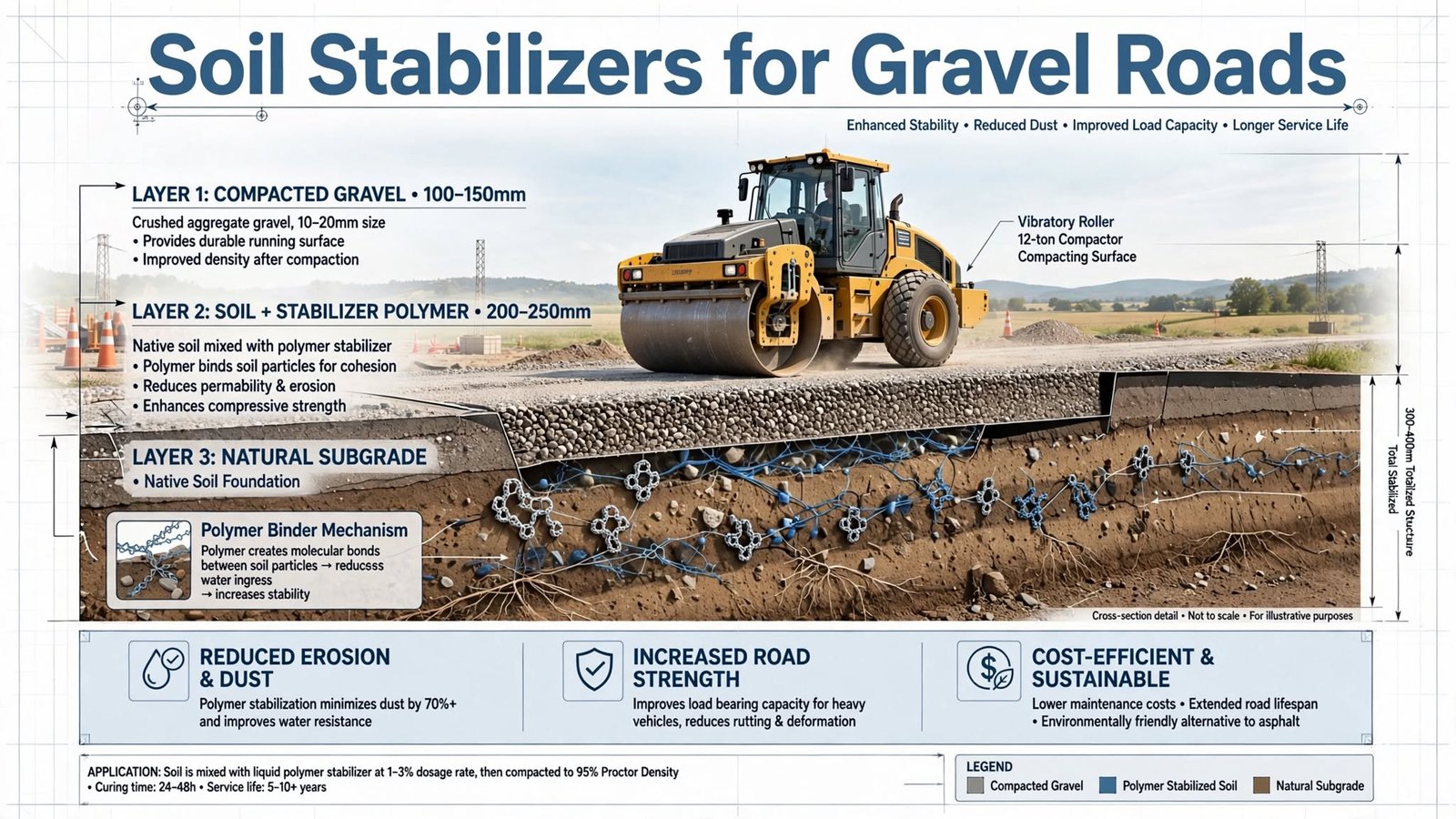
Loose gravel particles need mechanical pressure to lock together. Without compaction, Soil Stabilizers for Gravel Roads cannot create the dense structure needed for load support. Compaction transforms treated material into a strong, durable surface.
Vibratory rollers work best on gravel materials. The vibration settles particles into dense arrangements. Static rollers prove less effective. Soil Stabilizers for Gravel Roads compaction requires appropriate equipment selection.
Compaction moisture content affects results significantly. Gravel compacts best at specific moisture levels. The application process must account for these requirements. Too dry prevents particle rearrangement. Too wet causes instability.
Multiple compaction passes may be needed to achieve density. Single passes often prove insufficient. Soil Stabilizers for Gravel Roads projects require repeated passes. Rushing this step leads to premature failures.
Density testing verifies compaction quality. Soil Stabilizers for Gravel Roads performance depends on achieving specified density. Testing confirms proper compaction throughout the treated area.
Monitor Performance and Maintain Promptly
Soil Stabilizers for Gravel Roads provide long-term benefits with proper monitoring. Regular inspections detect problems early. Prompt repairs prevent minor issues from becoming major failures.
Visual inspections should occur regularly. Surface condition reveals Soil Stabilizers for Gravel Roads performance. Cracks, potholes, and rutting indicate problems requiring attention.
Testing verifies continued stabilizer effectiveness. Samples can be analyzed periodically. Strength testing reveals any degradation over time. Soil Stabilizers for Gravel Roads performance should be documented for future reference.
Maintenance requirements vary by stabilizer type and traffic loads. Heavy traffic roads need more frequent attention. Light traffic roads require less maintenance. Maintenance programs should reflect actual conditions.
Timely repairs extend road life significantly. Small cracks should be sealed quickly. Minor potholes should be patched immediately. Treated roads benefit from prompt maintenance attention.
Documentation helps track performance over time. Records of application details aid future decisions. Photos document initial conditions. Testing records show changes over time. This information guides future projects.
Soil Stabilizers for Gravel Roads deliver proven cost savings through reduced maintenance. The six secrets above ensure successful outcomes. Matching stabilizer type to gravel composition prevents failures. Correct application rates achieve optimal results. Thorough mixing ensures uniform stabilization. Moisture control enables proper reactions. Adequate compaction develops full strength. Ongoing monitoring protects the investment.
Soil Stabilizers for Gravel Roads require professional application for best results. Experienced contractors understand the principles. Following proven practices prevents common mistakes. Successful projects reduce maintenance costs dramatically.
Soil Stabilizers for Gravel Roads have transformed gravel road management. These products eliminate the endless cycle of grading and gravel replacement. Roads stay smoother longer. Dust problems decrease. Maintenance budgets stretch further.
Gravel roads serve millions of miles across the world. Soil Stabilizers for Gravel Roads make these roads more reliable and economical. The technology has proven itself repeatedly. Agencies that adopt stabilization never look back.
Soil Stabilizers for Gravel Roads continue evolving. New formulations offer improved performance. Better application techniques emerge regularly. Staying informed ensures maximum benefit from stabilization investments.
The six secrets above provide the framework for Soil Stabilizers for Gravel Roads success. Each project reveals new opportunities for improvement. Contractors and agencies who embrace stabilization discover advantages that last for decades.
Soil Stabilizers for Gravel Roads should be standard practice for every gravel road project. The cost savings speak for themselves. The performance improvements are undeniable. The technology delivers results that exceed expectations.
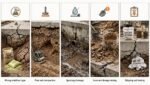

[…] Soil Stabilizers for Foundations prevent the cracks that destroy buildings from the ground up. Foundation cracks terrify property owners. Walls split open. Floors become uneven. Doors and windows stop working properly. Water seeps into basements. The structural integrity of the entire building comes into question. […]