
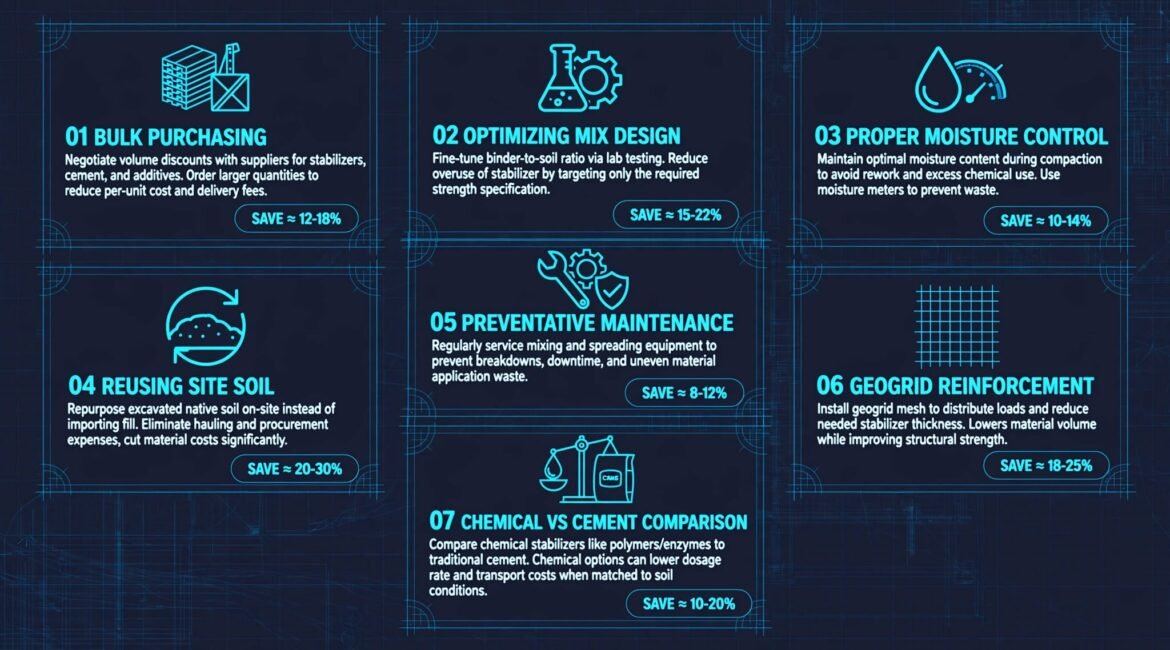
Soil Stabilizers for Construction Sites have become secret weapons for contractors looking to cut expenses without sacrificing quality. Construction budgets keep tightening. Material prices keep climbing. Labor costs keep rising. Every dollar saved matters more than ever. Smart contractors have discovered that proper soil stabilization delivers massive savings across multiple cost categories.
These stabilizers eliminate expenses that most project managers accept as unavoidable. Hauling costs disappear when on-site materials get used. Imported fill charges vanish when existing soil becomes suitable. Disposal fees for excavated material drop to zero. These savings add up quickly across large projects.
The seven proven tricks outlined below come from contractors who consistently deliver projects under budget. Soil Stabilizers for Construction Sites form the foundation of cost-effective construction practices. Understanding these techniques helps project managers achieve similar results on their own sites.
Use On-Site Materials Instead of Importing
Every truckload of imported fill costs money. Material charges add up fast. Trucking fees multiply the expense. Fuel surcharges pile on top. Traffic delays cost even more. These methods eliminate most of these costs by making existing soil usable.
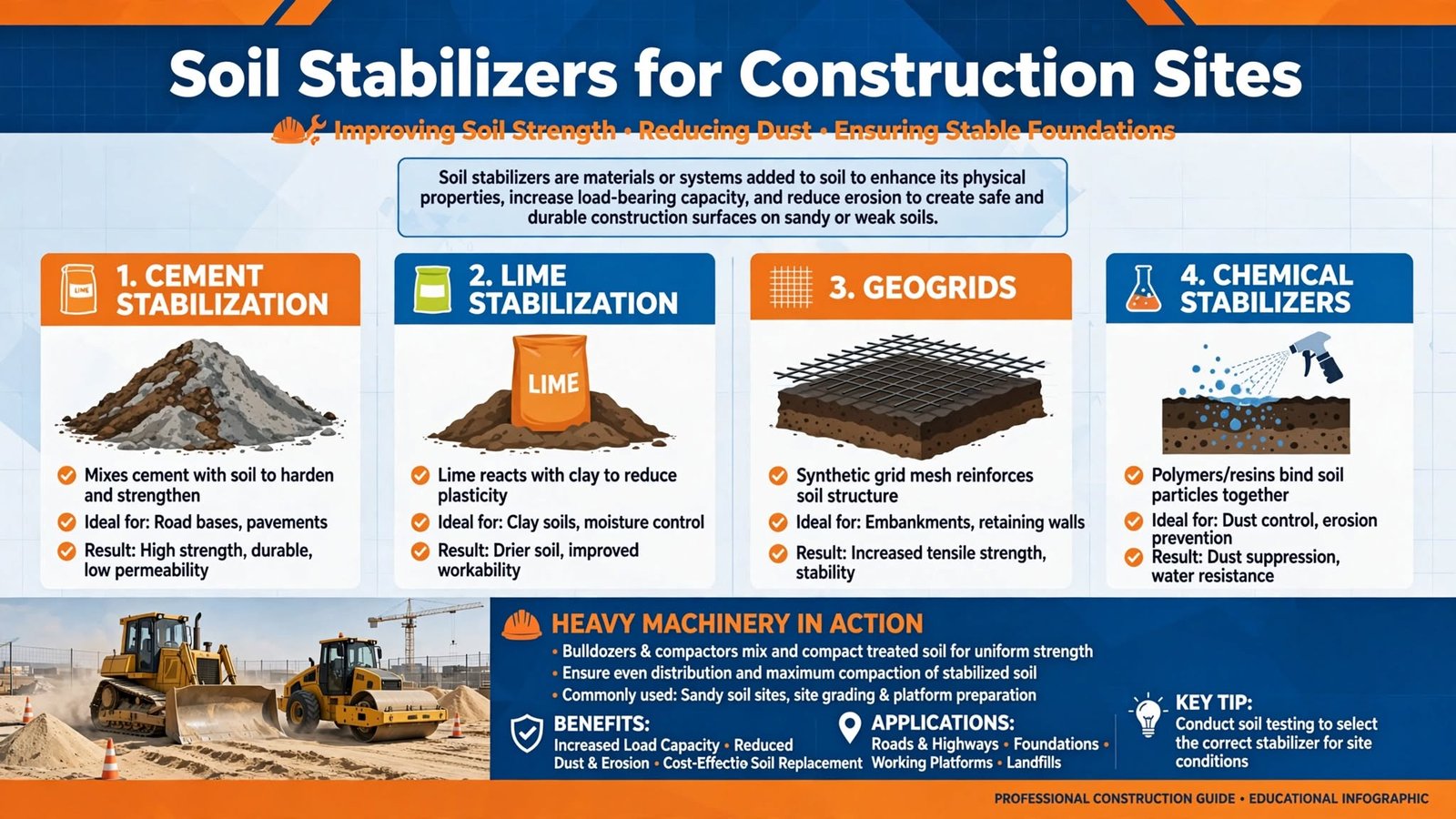
Site soils that would have been excavated and discarded become valuable construction material. Soil Stabilizers for Construction Sites transform weak, unstable ground into strong, load-bearing layers. What once required removal now becomes the foundation for construction.
The savings go beyond material costs. Fewer trucks mean less site traffic. Less traffic means fewer delays. They streamline logistics operations. Crews spend more time building and less time waiting for deliveries.
Disposal costs disappear entirely. Excavated soil no longer needs hauling to landfills. These stabilizers keep materials on site where they belong. Disposal fees, trucking charges, and landfill taxes all vanish from project budgets.
Remote sites benefit most from this approach. Importing materials to distant locations costs fortunes. Soil Stabilizers for Construction Sites make remote projects economically viable. Local soils become construction materials.
Reduce Base Course Thickness
Traditional construction requires thick base courses to support structures and pavements. The thickness compensates for weak subgrade conditions. Soil Stabilizers for Construction Sites strengthen the subgrade itself. The need for thick base layers decreases dramatically.
Proper stabilization increases bearing capacity substantially. Stronger subgrades carry loads with less base material. These stabilizers allow thinner base courses that perform better than thicker conventional designs. Material savings multiply across large areas.
Aggregate costs drop proportionally with thickness reduction. Less gravel means lower material expenses. Fewer truckloads mean lower delivery costs. Soil Stabilizers for Construction Sites deliver savings that accumulate rapidly on large projects.
The environmental benefits add value beyond direct cost savings. Reduced aggregate consumption conserves natural resources. Lower hauling emissions improve project sustainability. These products support green construction goals while improving bottom lines.
Eliminate Expensive Soil Replacement
Problem soils once required complete replacement. Excavation costs ran high. Imported fill costs added more. Disposal fees for bad soil piled on top. Soil Stabilizers for Construction Sites treat problem soils in place. Replacement becomes unnecessary.
Expansive clays that would have been removed get stabilized instead. Organic soils that required excavation get treated on site. These stabilization methods handle conditions that once demanded expensive remediation.
The time savings prove equally valuable. Soil replacement takes days or weeks. Stabilization happens in hours. Soil Stabilizers for Construction Sites accelerate project schedules. Faster completion means lower overhead costs.
Project timelines compress dramatically with stabilization. These stabilizers eliminate waiting for material deliveries. Crews stay productive. Equipment stays utilized. The entire project benefits from improved efficiency.
Accelerate Construction Schedules
Time equals money in construction. Every day of project duration costs overhead. Equipment rentals continue. Labor costs accumulate. Soil Stabilizers for Construction Sites compress schedules significantly.
Stabilization happens quickly compared to conventional methods. Material importation takes time. These stabilizers use existing materials. Work proceeds without delivery delays.
Weather delays decrease with stabilization. Treated surfaces resist rain damage. Soil Stabilizers for Construction Sites allow work to continue through conditions that would halt conventional operations. Schedule buffers shrink when weather impacts decrease.
Faster schedules mean earlier completion. Early completion reduces overhead costs. Such stabilizers deliver schedule savings that directly improve project profitability. Contractors finish more projects with the same resources.
Minimize Weather-Related Delays
Weather disrupts construction schedules constantly. Rain halts earthwork operations. Wet soils cannot be compacted properly. Soil Stabilizers for Construction Sites reduce weather vulnerability substantially.
Stabilized surfaces shed water effectively. The treated layer resists saturation. These solutions allow continued operations during light rain. Work proceeds when conventional sites shut down.
Recovery time after storms decreases with stabilization. Treated surfaces drain quickly. Soil Stabilizers for Construction Sites return to service faster than untreated ground. Lost time gets recovered sooner.
The cumulative effect on schedules proves significant. These stabilizers keep projects moving through weather challenges. Completion dates get met despite conditions that would delay conventional construction.
Reduce Maintenance During Construction
Construction sites require constant maintenance. Rutted haul roads need grading. Dusty surfaces need watering. Muddy areas need gravel. Soil Stabilizers for Construction Sites reduce these ongoing expenses.
Stabilized haul roads resist rutting. Heavy equipment causes less damage. These stabilizers keep roads serviceable longer. Grading frequency decreases. Maintenance crews handle other tasks.
Dust control improves with stabilization. Treated surfaces generate less dust. Soil Stabilizers for Construction Sites reduce watering requirements. Water trucks stay parked more often. Fuel and labor savings accumulate daily.
Mud problems disappear with proper stabilization. Treated surfaces drain well. These methods prevent the muddy conditions that track onto public roads. Cleanup costs decrease. Community complaints drop.
Lower Long-Term Repair Costs
Construction defects cost fortunes to repair. Settlement causes structural damage. Pavement failures require reconstruction. Soil Stabilizers for Construction Sites prevent these expensive problems.
Proper stabilization prevents differential settlement. Structures remain level. Pavements stay smooth. These stabilizers eliminate the defects that generate repair costs.
Warranty claims decrease with quality stabilization. Owners avoid unexpected expenses. Soil Stabilizers for Construction Sites protect contractor reputations. Repeat business increases when projects perform well.
Long-term performance validates the stabilization investment. These methods deliver value that continues for decades. Initial savings combine with long-term durability. The total cost of ownership drops dramatically.
Soil Stabilizers for Construction Sites deliver seven proven cost-saving benefits. On-site material usage eliminates import expenses. Thinner base courses reduce aggregate costs. Soil replacement becomes unnecessary. Schedules accelerate. Weather delays decrease. Maintenance requirements drop. Long-term repairs get prevented.
These stabilizers require proper application for best results. Testing identifies appropriate products. Experienced contractors understand the techniques. Following proven practices ensures success.
Soil Stabilizers for Construction Sites represent smart construction practice. The savings extend across every project phase. Initial investments pay returns quickly. Long-term benefits continue accumulating.
Contractors who master Soil Stabilizers for Construction Sites gain competitive advantages. Bids come in lower. Profits improve. Clients appreciate the value. The reputation for quality and cost-effectiveness grows.
Soil Stabilizers for Construction Sites should be standard practice on every project. The tricks outlined above deliver consistent results. Cost savings reach every budget category. Projects finish faster, cheaper, and better.
Modern Soil Stabilizers for Construction Sites outperform older products dramatically. New formulations deliver better results at lower costs. Application techniques continue improving. Staying informed ensures maximum benefit.
The seven tricks above only scratch the surface of what these stabilizers can achieve. Each project reveals new opportunities for savings. Contractors who embrace stabilization discover advantages that competitors miss.
Soil Stabilizers for Construction Sites have transformed construction economics. Projects that once seemed unprofitable become viable. Budgets that once seemed impossible become achievable. The technology delivers results.


[…] Soil Stabilizers for Gravel Roads break the endless maintenance cycle permanently. Gravel roads eat up budgets like nothing else. Crews grade them constantly. Fresh gravel gets spread every few months. Dust clouds annoy nearby residents. Rain carves ruts into surfaces that just got smoothed. The cycle never ends. […]