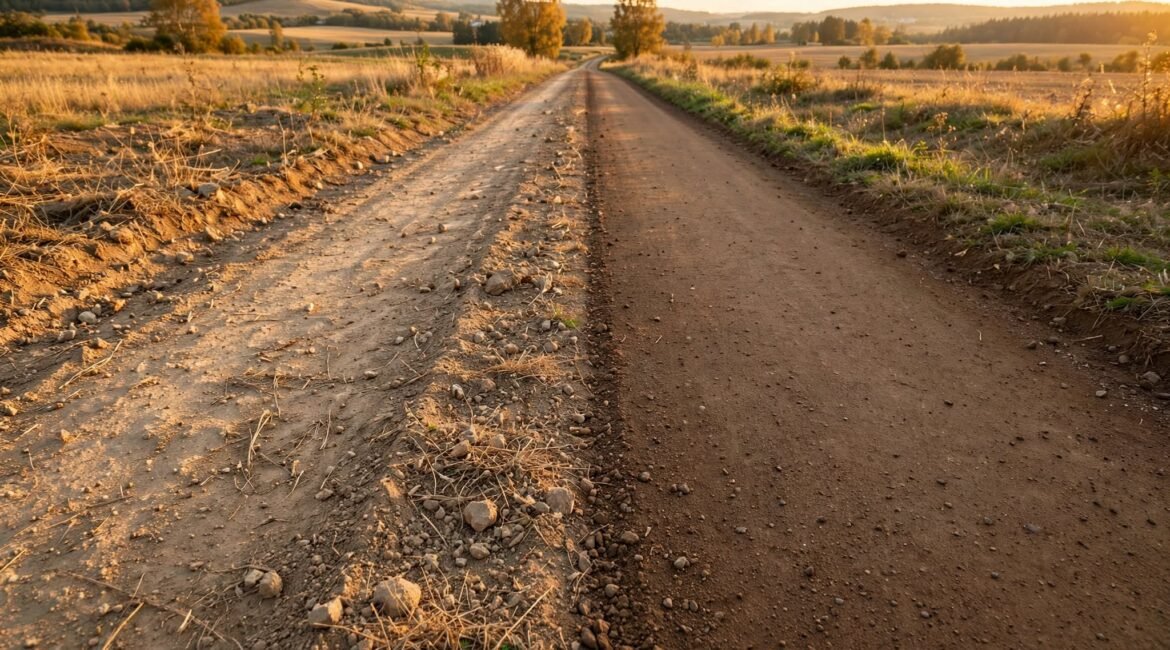
Soil Stabilizers for Dirt Roads end the dust nightmare that ruins summers for rural communities. Dust from unpaved roads coats everything within hundreds of feet. Homes turn gray. Lawns suffocate. Windows stay closed all season. Breathing becomes difficult for anyone with respiratory conditions. Visibility drops to dangerous levels when wind kicks up loose surface material.
The problem goes far beyond simple annoyance. Health departments track increased emergency visits in dusty areas. Vehicle maintenance costs skyrocket. Property values suffer. Soil Stabilizers for Dirt Roads solve these problems permanently when applied correctly.
The four powerful secrets below come from successful dust control projects across many regions. Each secret builds on practical experience. Soil Stabilizers for Dirt Roads deliver results that last for years rather than months. Understanding these techniques helps road agencies achieve lasting dust control.
Match Stabilizer Type to Local Conditions
Soil Stabilizers for Dirt Roads come in several formulations, and not all work in every situation. Dust generation depends on material composition, climate, and traffic patterns. The right product depends entirely on these local factors.
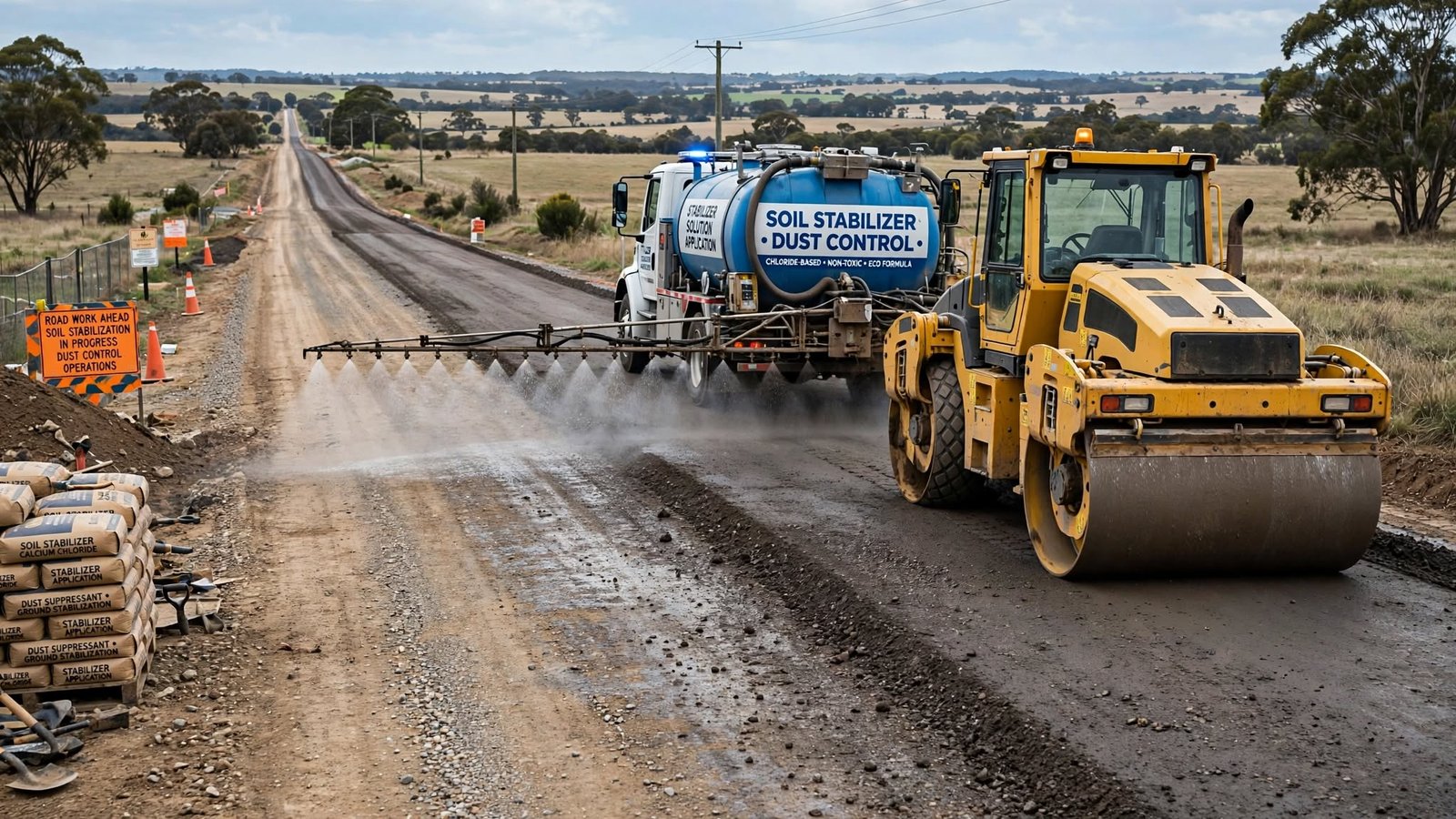
Chloride-based Soil Stabilizers for Dirt Roads draw moisture from the air. The absorbed moisture keeps road surfaces slightly damp. Dust particles stay bound together rather than becoming airborne. These products work best in humid climates where atmospheric moisture remains available throughout the year.
Lignin-based products come from wood processing byproducts. These natural polymers bind particles together effectively. The treated surface resists dust generation while maintaining natural appearance. Lignin products work well in many climates and conditions.
Polymer-based Soil Stabilizers for Dirt Roads create strong bonds between particles. These synthetic products coat each grain and hold everything together. The resulting surface resists both dust generation and rain erosion. Polymer stabilization lasts longer than many alternatives.
Enzymatic treatments work through biological mechanisms. These products modify fine particles permanently. The treated road stops generating dust for extended periods. Enzymatic stabilization offers excellent longevity when conditions suit the product.
Selecting the wrong stabilizer type wastes money and produces poor results. Soil Stabilizers for Dirt Roads must match local conditions precisely. Climate, traffic patterns, and material composition all influence product selection. Testing before selection prevents costly mistakes.
Apply at the Correct Rate
Soil Stabilizers for Dirt Roads require precise application rates for optimal dust control. Too little product fails to bind all particles. Too much wastes money without improving performance. Finding the right rate matters enormously.
Manufacturer recommendations provide starting points. These guidelines assume typical conditions. Actual rates may need adjustment based on local materials. Stabilizer application should always begin with proper testing.
Laboratory testing mixes different rates with actual road material. Performance evaluation identifies the most effective concentration. This scientific approach removes guesswork from Soil Stabilizers for Dirt Roads selection.
Field trials confirm laboratory results. Small road sections get treated with different rates. Dust monitoring reveals the best approach. Full-scale application follows successful trials. These stabilization projects benefit from this methodical process.
Budget pressures sometimes lead to reduced quantities. The resulting roads continue generating dust. The supposed savings disappear when residents complain. Soil Stabilizers for Dirt Roads should never be under-applied to save money.
Over-application creates different problems. Excess stabilizer may create slippery conditions. Waste money provides no benefit. Applying these solutions requires careful calculation.
Mix Thoroughly Through Full Depth
Poor mixing leaves untreated material throughout the road surface. These areas continue generating dust. The treated road performs unevenly. Proper mixing prevents these problems entirely.
Mixing equipment must match project scale. Large road projects need powerful mixing machines. Smaller projects may use graders with mixing attachments. Stabilizer mixing depth deserves careful attention.
Treatment must extend to the required depth. Shallow mixing leaves deeper untreated material. This material migrates to the surface over time. Soil Stabilizers for Dirt Roads applied to proper depth achieve lasting dust control.
Mixing speed affects distribution quality. Too fast may not achieve adequate blending. Too slow wastes time and money. Optimal mixing speed achieves thorough coverage efficiently. Experienced operators know the right pace.
Visual inspection during mixing checks for uniform color and consistency. The stabilized material should blend evenly without streaks. Testing confirms stabilizer distribution. Stabilization quality depends on proper mixing.
Maintain the Treated Surface
Soil Stabilizers for Dirt Roads provide long-term dust control with proper maintenance. Regular monitoring detects problems early. Prompt repairs prevent minor issues from becoming major failures.
Visual inspections should occur regularly. Surface condition reveals Soil Stabilizers for Dirt Roads performance. Areas generating dust indicate the need for additional treatment. Early detection prevents widespread problems.
Traffic patterns affect performance significantly. Heavy vehicles stress treated surfaces more than cars. High-traffic areas may need more frequent attention. Maintenance programs should reflect actual use.
Weather affects Soil Stabilizers for Dirt Roads over time. Intense rain can wash away some stabilizer. Extended drought may reduce effectiveness of moisture-dependent products. These conditions require monitoring and adjustment.
Timely repairs extend road life significantly. Small problem areas should be retreated quickly. Treated roads benefit from prompt maintenance attention.
Documentation helps track performance over time. Records of application details aid future decisions. Photos document initial conditions. Testing records show changes over time. This information guides future Soil Stabilizers for Dirt Roads projects.
Soil Stabilizers for Dirt Roads deliver proven dust control through proper selection and application. The four powerful secrets above ensure successful outcomes. Matching stabilizer type to local conditions prevents failures. Correct application rates achieve optimal results. Thorough mixing ensures uniform stabilization. Ongoing maintenance protects the investment.
Soil Stabilizers for Dirt Roads require professional application for best results. Experienced contractors understand the principles. Following proven practices prevents common mistakes. Successful projects eliminate dust problems dramatically.
Soil Stabilizers for Dirt Roads have transformed unpaved road management. These products eliminate the dust clouds that plague rural communities. Air quality improves. Health complaints decrease. Residents finally enjoy clean air.
Dirt roads serve millions of miles across the world. Soil Stabilizers for Dirt Roads make these roads more livable and economical. The technology has proven itself repeatedly. Communities that adopt stabilization never look back.
Soil Stabilizers for Dirt Roads continue evolving. New formulations offer improved performance. Better application techniques emerge regularly. Staying informed ensures maximum benefit from stabilization investments.
The four secrets above provide the framework for Soil Stabilizers for Dirt Roads success. Each project reveals new opportunities for improvement. Contractors and agencies who embrace stabilization discover advantages that last for decades.
Soil Stabilizers for Dirt Roads should be standard practice for every unpaved road project. The dust control benefits speak for themselves. The health improvements are undeniable. The technology delivers results that exceed expectations.