
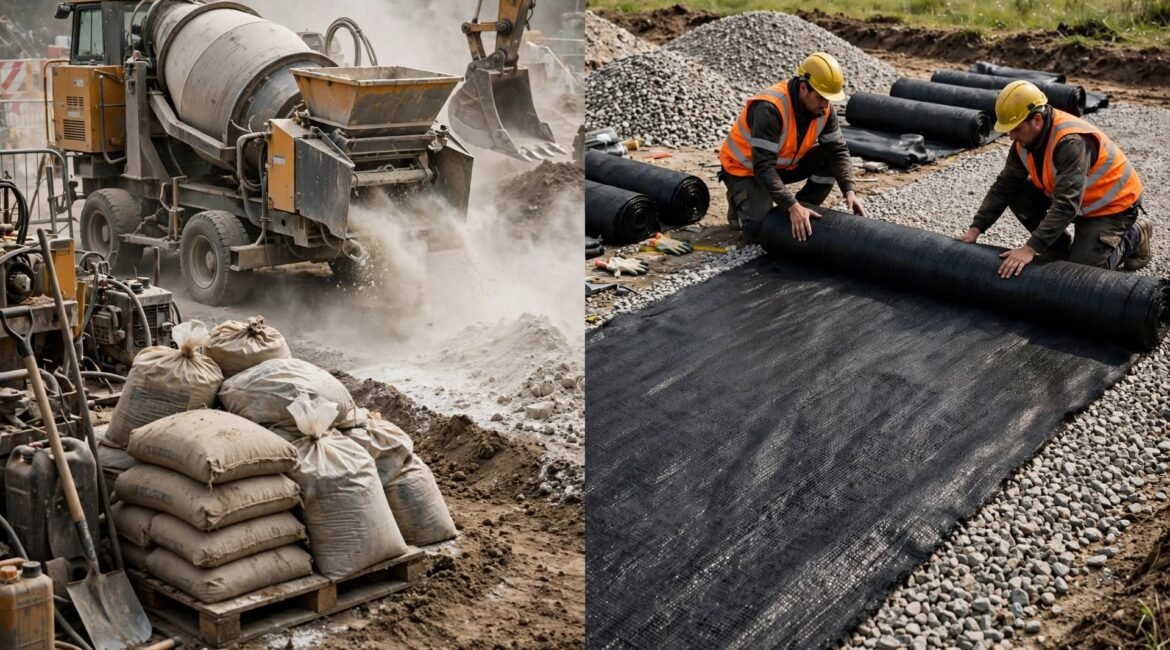
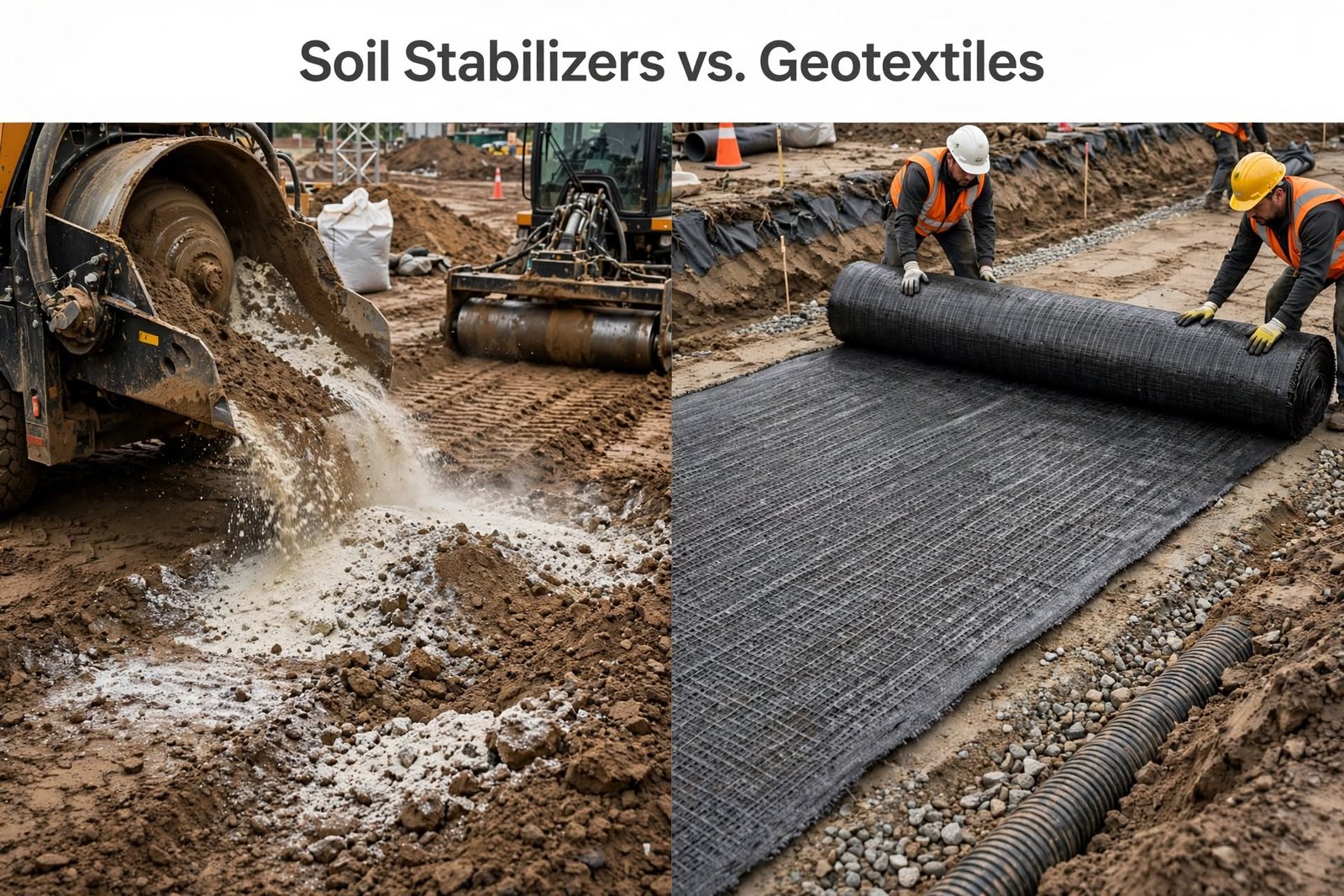
Soil Stabilizers vs. Geotextiles – this comparison confuses more project managers than almost any other erosion control decision. The price tags on geotextile rolls look reasonable at first glance. The installation seems straightforward enough. The perceived permanence appeals to decision makers seeking simple solutions. But the numbers tell a very different story once all factors get examined properly.
Soil Stabilizers vs. Geotextiles debates happen in construction offices worldwide. Contractors argue about which approach saves money. Engineers defend their preferred methods. Project owners demand cost-effective solutions. Understanding the real cost differences ends these arguments permanently.
The five cost differences outlined below reveal what experienced contractors already know. Soil Stabilizers vs. Geotextiles comparisons often ignore critical factors that determine true project costs. Smart buyers evaluate all expenses before making final decisions. The surprising gaps in pricing, installation, maintenance, replacement, and long-term value determine which approach makes sense for each unique situation.
Purchase Price Differences Deceive Most Buyers
Soil Stabilizers vs. Geotextiles price comparisons start with purchase costs. Stabilizers typically cost fifty to seventy percent less than geotextiles at the point of purchase. A standard geotextile fabric runs one to three dollars per square yard depending on weight and strength specifications. Compare that to stabilizers that cover the same area for thirty cents to a dollar per square yard. The initial price difference jumps out immediately.
But purchase price alone misleads many buyers. Geotextiles arrive as complete rolls ready for installation. These cost comparisons must include equipment costs. Stabilizers require proper mixing equipment. Some products need specialized sprayers for effective application. Others demand precise calibration equipment. These added equipment expenses eat into the apparent savings.
Geotextile rolls stack neatly on pallets. Delivery costs remain predictable. Stabilizers come in bags, drums, or bulk containers. Storage requirements differ significantly. Liquid products need temperature-controlled storage. Dry products demand protection from moisture. These logistics considerations add hidden costs that factor into these calculations.
Quality variation complicates price comparisons further. Cheap geotextiles tear easily and fail prematurely. Premium fabrics perform better but cost substantially more. Stabilizers similarly range from low-quality products that disappoint to high-performance options that deliver excellent value. Comparing the cheapest options from each category leads to false conclusions about their cost differences.
Savvy buyers look beyond the purchase price. They calculate total delivered cost including logistics, equipment, and quality factors. Stabilizers maintain their price advantage in most situations. Geotextiles only become competitive when projects need immediate installation without mixing time. The Soil Stabilizers vs. Geotextiles price gap remains significant.
Installation Labor Costs Surprise Project Managers
Soil Stabilizers vs. Geotextiles installation costs differ dramatically. The labor cost difference between these approaches frequently surprises project managers who expected similar numbers. Understanding these differences prevents budget overruns.
Geotextile installation demands basic labor skills. Workers unroll fabric across prepared ground. Edges get secured with stakes or buried in anchor trenches. Overlapping sections connect with sewing equipment or pins. The work proceeds quickly. A standard crew covers thousands of square yards each day. The learning curve remains minimal for most workers.
Stabilizers need more specialized application techniques. Liquid products require proper mixing ratios. Workers must maintain consistent spray rates across varying slope conditions. Dry products need careful calibration of spreader equipment. The work demands constant attention. Progress slows significantly compared to geotextile installation. Labor comparisons reveal this difference clearly.
Training requirements differ dramatically between approaches. Geotextile crews learn the basics in hours. Stabilizer applicators need extensive product knowledge. Understanding application variables like weather, soil type, and slope angle requires experience. Skilled applicators earn premium wages. These higher rates add to overall project labor costs in these comparisons.
Weather affects both methods but differently. Rain delays geotextile installation until slopes dry. Stabilizers face stricter weather constraints. Rain immediately after application washes away unstabilized products. Strong winds affect spray application. Cold temperatures slow curing. These weather constraints add labor hours and costs.
The labor cost advantage usually goes to geotextiles. Faster installation with less skilled workers translates to lower expenses. Stabilizers need more time and more experienced crews. This gap widens on large projects where labor dominates budgets. Soil Stabilizers vs. Geotextiles labor differences matter enormously for project economics.
Maintenance Requirements Create Hidden Expenses
Soil Stabilizers vs. Geotextiles maintenance stories reveal the most surprising cost differences. Many buyers fixate on initial costs while ignoring what happens years later. This oversight leads to expensive mistakes.
Stabilizers generally need reapplication at regular intervals. Organic tackifiers last three to six months. Synthetic polymers provide one to three years of protection. Even premium stabilizers eventually degrade. Each reapplication costs similar to the initial treatment. These recurring expenses add significantly over time. Maintenance comparisons show stabilizers requiring ongoing investment.
Geotextiles stay in place for years without maintenance. The fabric does not degrade from biological activity. UV exposure damages exposed edges, but buried sections remain intact indefinitely. Maintenance requirements effectively disappear once installation finishes properly. The maintenance differences become obvious over time.
The maintenance cost gap grows dramatically over a project’s life. A slope treated with stabilizers might need fresh application every two years. Each application repeats the initial investment. After ten years, the maintenance costs have multiplied substantially. Geotextiles simply continue functioning without additional expense. The Soil Stabilizers vs. Geotextiles maintenance gap widens every year.
However, geotextile repairs create expensive problems. Tears from rockfall or equipment damage require patching. Anchor trench failures need reconstruction. These repairs prove costly and disrupt operations. Stabilizers face no similar repair requirements. Damaged areas simply get retreated at the next scheduled application. These repair considerations affect overall costs.
Long-term cost calculations must include maintenance. Stabilizers often become more expensive over decades. Geotextiles tend to be cheaper in the very long term. Project lifespan determines which approach makes financial sense in Soil Stabilizers vs. Geotextiles decisions.
Replacement Costs Change Everything
Soil Stabilizers vs. Geotextiles replacement considerations dramatically affect total project economics. Stabilizers eventually require complete replacement. The products break down naturally or wear out from environmental exposure. Replacement means repeating the entire application process. These costs appear on budgets periodically.
Geotextiles rarely need complete replacement. The fabric continues functioning as long as physical integrity remains. Properly installed geotextiles last decades without replacement. This longevity advantage becomes significant for infrastructure projects with long service lives. Such replacement comparisons favor geotextiles strongly.
Replacement frequency varies widely for stabilizers. Organic products need replacement most frequently. Synthetic stabilizers last longer but still require renewal. Cementitious stabilizers last longest but cost much more initially. The replacement interval affects total lifecycle costs enormously. Soil Stabilizers vs. Geotextiles replacement schedules differ based on product selection.
Geotextile replacement becomes necessary only when damage compromises functionality. Major slope failures can tear geotextiles beyond repair. Equipment accidents cause localized damage. These events remain relatively rare. Most geotextile installations outlive the structures they protect. Soil Stabilizers vs. Geotextiles replacement frequency shows clear differences.
The replacement cost advantage clearly belongs to geotextiles. Their extended service life eliminates recurring renewal costs. Stabilizers eventually need replacement like any consumable product. This reality affects budgets significantly over time. Soil Stabilizers vs. Geotextiles replacement economics favor geotextiles for permanent projects.
Long-Term Value Determines Real Cost
Soil Stabilizers vs. Geotextiles value comparisons depend entirely on project requirements. Stabilizers deliver excellent value on short to medium-term projects. Construction sites needing one to three years of protection benefit greatly. The lower initial cost and reasonable performance make stabilizers the smart economic choice.
Geotextiles prove more valuable on permanent projects. Highway embankments and dam slopes justify the higher initial investment. The decades of maintenance-free service offset the purchase price. Long-term value calculations favor geotextiles for permanent installations. Soil Stabilizers vs. Geotextiles value differences become clear based on project lifespan.
The value equation changes based on specific project conditions. Steep slopes might require geotextiles regardless of cost. Gentle slopes perform well with stabilizers. Soil type affects performance significantly. High rainfall areas demand robust solutions. Each project requires individual Soil Stabilizers vs. Geotextiles evaluation.
Contractors increasingly favor stabilizers for temporary projects. The savings are substantial compared to geotextiles. The performance meets requirements for typical construction timeframes. Budget pressures favor lower initial costs in competitive bidding environments. Soil Stabilizers vs. Geotextiles project economics favor stabilizers for short-term needs.
Environmental considerations affect value calculations. Geotextiles remain in the ground permanently. Stabilizers biodegrade naturally. Sustainability goals favor stabilizers that leave no persistent materials behind. This environmental value increasingly matters to project owners. Soil Stabilizers vs. Geotextiles environmental comparisons add another dimension to value assessments.
Soil Stabilizers vs. Geotextiles debates will continue as long as erosion control projects exist. The cost differences between these approaches are substantial and sometimes shocking. Initial purchase prices favor stabilizers significantly. Installation labor costs generally favor geotextiles. Maintenance requirements differ dramatically between approaches. Replacement costs vary enormously based on product selection. Long-term value depends entirely on project requirements and expected lifespan.
Smart decision makers evaluate all five cost factors before selecting erosion control methods. Stabilizers provide excellent value for many applications. Geotextiles remain the right choice for permanent installations requiring decades of service. Soil Stabilizers vs. Geotextiles decisions require careful analysis of project-specific conditions and constraints.
Understanding the true cost picture prevents expensive mistakes. Project success depends on matching the right approach to each unique situation. Soil Stabilizers vs. Geotextiles comparisons should include all relevant factors rather than focusing on purchase prices alone. The five shocking differences outlined above provide the framework for making informed decisions that protect budgets and ensure project success.

[…] Soil Stabilizers for Clay have become essential tools for property owners dealing with problematic clay soils. Anyone who has built on clay ground knows the nightmares. Cracks appear in walls without warning. Floors become uneven and slope dangerously. Doors stop closing properly as foundations shift. The damage happens slowly at first, then accelerates dramatically. […]