
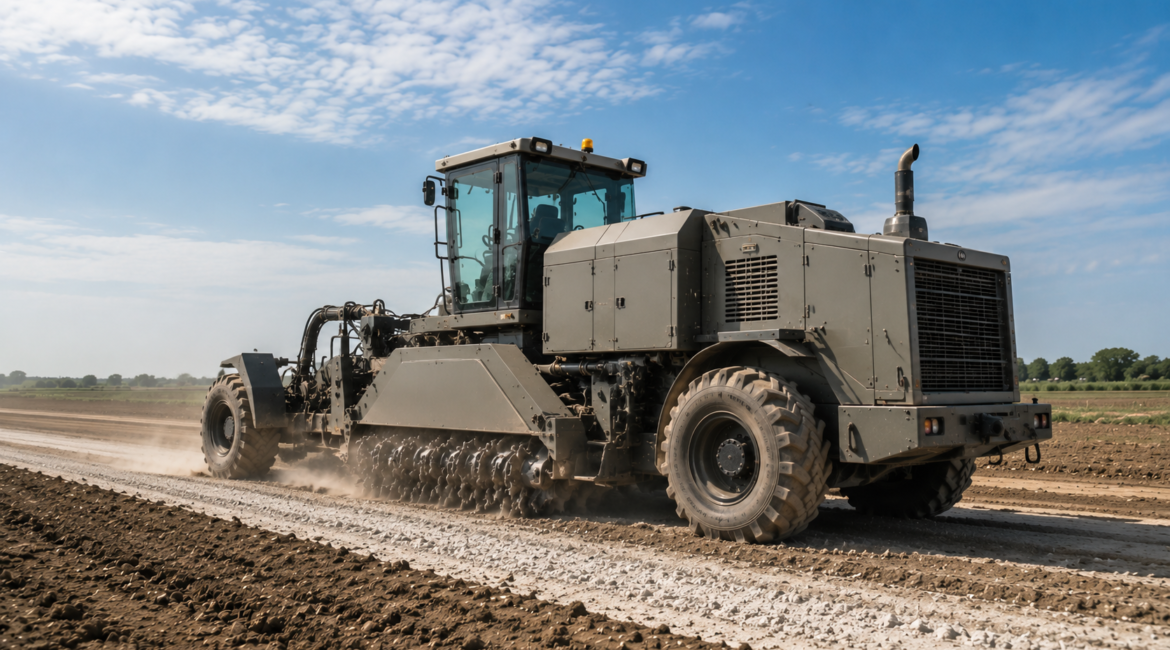
Soil Stabilizers That Work have become the backbone of modern road construction and maintenance. Road builders face constant challenges from weak subgrades, heavy traffic loads, and harsh weather conditions. Poor soil conditions cause roads to fail within months rather than years. The costs of frequent repairs drain budgets and frustrate commuters endlessly.
Soil Stabilizers That Work change this picture dramatically. They transform weak, unstable soils into strong, durable road bases. Soil Stabilizers That Work double road lifespan when applied correctly. The wrong approaches waste money and create more problems than they solve.
The nine expert tips outlined below come from years of practical experience. Road construction professionals rely on these principles for successful projects. Following these guidelines prevents expensive failures and extends road service life significantly.
Test Soil Thoroughly Before Selection
Proper testing reveals soil composition, plasticity, and moisture content. These factors determine which Soil Stabilizers That Work will perform effectively. Options that work on clay soils may fail completely on sandy soils. Lime works wonders on plastic clays but does nothing for granular materials. Cement performs excellently on many soils but struggles with high organic content. Knowing soil properties guides appropriate Soil Stabilizers That Work selection.
Understanding soil chemistry proves equally important. PH levels affect chemical reactions. Salt content influences stabilizer performance. Organic matter interferes with some stabilizers. Comprehensive testing identifies all relevant soil characteristics. Selection without testing guarantees problems. Guesswork leads to wasted materials and failed roads. Testing costs are minimal compared to road construction expenses. Skipping testing represents false economy.
Experienced contractors refuse to work without proper testing. The testing investment pays for itself through successful outcomes. Road projects should never proceed without thorough soil analysis.
Match Stabilizer Type to Site Conditions
Products that work on one project may fail miserably on another. Matching stabilizer type to soil conditions determines success or failure. Understanding which Soil Stabilizers That Work with which soils prevents expensive mistakes.
Lime stands among the most proven options for clay soils. The chemical reaction reduces plasticity and increases strength. Clay particles bind together permanently. The resulting material resists water damage effectively. Cement works well for granular soils. Sandy and gravelly materials respond well to cement treatment. The cement creates strong bonds between particles. The stabilized material achieves impressive strength.
Polymers provide versatile options across many soil types. These synthetic products bind particles through physical mechanisms. Polymers work on both clay and granular soils. Application rates vary based on soil conditions. Enzymatic Soil Stabilizers That Work suit specific clay conditions. These biological products alter clay surface properties. The effects last for years when properly applied. Enzymatic Soil Stabilizers That Work best in specific moisture ranges.
Proper matching to site conditions prevents failures. Wrong selection of Soil Stabilizers That Work guarantees failure regardless of application quality. Professional guidance ensures appropriate Soil Stabilizers That Work selection. Understanding soil compatibility with Soil Stabilizers That Work prevents costly mistakes.
Apply Correct Application Rates
Soil Stabilizers That Work require precise application rates for optimal performance. Too little fails to achieve adequate strength. Too much wastes material and may create problems. Finding the right rate matters enormously.
Application rates vary by product and soil type. Manufacturer recommendations provide starting points. Laboratory testing determines optimal rates for specific conditions. Field adjustments fine-tune application based on actual results. Under-application represents a common mistake. Budget pressures lead to reduced quantities of Soil Stabilizers That Work. The resulting roads fail prematurely. The supposed savings disappear when early repairs become necessary.
Over-application creates different problems. Excess lime causes excessive cracking. Too much polymer creates slippery conditions. Wasted money provides no benefit. More is not always better. Professionals calculate rates carefully. They consider soil conditions and performance requirements. They adjust rates based on field conditions. Experience guides these critical decisions.
Application rates should be verified during construction. Field testing confirms actual content of Soil Stabilizers That Work. Adjustments correct any deviations from specifications. Quality control prevents application errors.

Ensure Thorough Mixing
Soil Stabilizers That Work require uniform distribution throughout the treatment depth. Poor mixing leaves untreated pockets that become weak spots. These weak spots fail under traffic loads. Proper mixing prevents these failures.
Mixing equipment must be appropriate for the project. Large road projects need powerful mixing machines. Small projects may use smaller equipment. The equipment must achieve thorough mixing regardless of project size. Mixing depth deserves careful attention. Treatment must extend to the required depth. Shallow mixing leaves deeper untreated material. The untreated layer fails under heavy loads. Proper depth achieves uniform stabilization.
Mixing speed affects results. Too fast may not achieve adequate mixing. Too slow wastes time and money. Optimal mixing speed achieves thorough distribution efficiently. Experienced operators know the right speed. Mixing should be verified during construction. Visual inspection checks for uniform color and consistency. Testing confirms distribution of Soil Stabilizers That Work. Quality assurance prevents mixing problems.
Poor mixing represents a common failure cause. Contractors rush the mixing process. The resulting roads fail prematurely. Taking time for proper mixing pays dividends through longer road life.
Control Moisture Content
Soil Stabilizers That Work require specific moisture conditions for effectiveness. Too dry prevents proper chemical reactions. Too wet dilutes stabilizers and reduces strength. Moisture control determines success or failure.
Moisture requirements vary by product type. Lime needs moisture for chemical reactions. Cement requires water for hydration. Polymers need moisture for proper dispersion. Each product has specific moisture needs. Moisture testing guides application decisions. Moisture content should be measured before starting. Adjustments bring moisture to optimal range. Ongoing monitoring ensures moisture remains appropriate throughout construction.
Moisture problems often occur during construction. Rain adds unwanted water. Dry weather removes needed moisture. Contractors must manage these changing conditions. Proper planning prevents moisture problems. Moisture control equipment helps maintain proper conditions. Water trucks add moisture when needed. Discs and harrows help dry wet soils. Active management achieves optimal moisture for stabilizer effectiveness.
Moisture neglect leads to failures. Dry soil prevents proper reactions from occurring. Wet soil produces weak, unstable material. Moisture control deserves priority attention.
Allow Proper Curing Time
Soil Stabilizers That Work require adequate curing time to develop full strength. Chemical reactions take time to complete. Opening roads too early causes premature failure. Patience during curing prevents problems.
Curing times vary by product and conditions. Lime-stabilized soils may need weeks for full strength development. Cement-stabilized materials cure within days under proper conditions. Polymer treatments cure quickly in good weather. Curing conditions affect the process. Temperature influences reaction rates. Moisture availability affects curing progress. Proper curing conditions should be maintained throughout the process.
Traffic restrictions protect curing roads. Heavy loads damage unstabilized materials. Light traffic may be permitted after initial curing. Full traffic loads should wait until complete strength development. Testing confirms adequate curing. Strength testing determines when roads are ready. Field testing provides immediate results. Laboratory testing confirms final strength characteristics.
Early opening causes serious damage. Construction schedules pressure contractors. The resulting damage negates stabilization benefits. Proper curing ensures long-term road performance.
Compact Properly After Application
Soil Stabilizers That Work require proper compaction to achieve maximum density and strength. Inadequate compaction leaves voids that weaken the road. Over-compaction can damage the soil structure. Proper compaction is essential.
Compaction equipment must match the project. Large rollers work on major roads. Smaller equipment suits minor projects. Equipment selection affects compaction quality. Compaction moisture content affects results. Optimal moisture for compaction differs from requirements of Soil Stabilizers That Work. Balancing these needs requires careful management. Professional contractors understand this balance.
Compaction should be verified during construction. Density testing confirms compaction quality. Adjustments correct any deficiencies. Quality control prevents compaction problems. Poor compaction leads to failures. Weak spots develop where compaction was insufficient. Traffic loads accelerate deterioration. Proper compaction prevents these problems.
Compaction attention pays dividends. Dense, well-compacted roads last longer. Maintenance requirements decrease significantly. The compaction effort provides excellent return on investment.
Provide Adequate Drainage
Proper stabilizer performance depends on good drainage. Water accumulation undermines stabilized roads. Surface drainage removes water from the road surface. Subsurface drainage prevents water buildup within the road structure.
Drainage design should be incorporated into road planning. Crowns and slopes direct surface water away. Ditches and culverts remove collected water. Underdrains prevent subsurface water accumulation. Poor drainage negates stabilization benefits. Water weakens even the best stabilized materials. Freeze-thaw cycles damage wet road bases. Proper drainage protects stabilized roads.
Drainage maintenance ensures continued performance. Clogged drains cause water problems. Regular inspection and cleaning maintain drainage effectiveness. Neglected drains lead to road failures. Drainage attention prevents expensive repairs. Water-related damage costs millions annually. Proper drainage is relatively inexpensive. Prevention through drainage is far cheaper than repair.
Monitor and Maintain Regularly
Soil Stabilizers That Work provide long-term benefits with proper maintenance. Regular monitoring detects problems early. Prompt repairs prevent minor issues from becoming major failures. Maintenance preserves road investments.
Monitoring includes visual inspections. Cracks, potholes, and rutting indicate problems. Early detection allows timely intervention. Regular inspections prevent surprise failures. Maintenance requirements vary by road use. Heavy traffic roads need more frequent attention. Light traffic roads require less frequent maintenance. Maintenance programs should reflect actual conditions.
Timely repairs extend road life. Small cracks can be sealed quickly. Minor potholes can be patched easily. Waiting makes problems worse and more expensive. Road maintenance prevents major reconstruction. Proper maintenance doubles road lifespan. Maintenance costs are a fraction of reconstruction costs. Investing in maintenance saves money long-term.
Life extension requires ongoing commitment. Roads require care throughout their service life. Neglect transforms good roads into failed ones. Responsible maintenance protects the stabilization investment.
Soil Stabilizers That Work have revolutionized road construction. Soil Stabilizers That Work transform weak soils into durable road bases. The nine expert tips above ensure successful outcomes. Proper testing and product selection prevent failures. Correct application rates achieve optimal results. Thorough mixing ensures uniform stabilization. Moisture control enables proper reactions. Adequate curing develops full strength. Proper compaction achieves maximum density. Good drainage protects the stabilized road. Ongoing maintenance extends road life significantly.
Professional application delivers best results. Experienced contractors understand the principles. Following the tips prevents common mistakes. Successful projects double road lifespan. The investment in proper stabilization pays dividends through reduced maintenance and extended service life.
Soil Stabilizers That Work represent proven technology. Soil Stabilizers That Work have been used successfully for decades. Modern formulations outperform older products dramatically. Application techniques continue improving. Current best practices achieve excellent results.
Every road project should include Soil Stabilizers That Work. Weak subgrades no longer condemn roads to early failure. Soil Stabilizers That Work extends road life substantially. The principles outlined above guide successful projects. Following these expert tips ensures roads that serve communities for decades rather than years.

[…] Soil Stabilizers for Road Construction have changed the game for modern road building. Yet most contractors only know the basics. They understand these products make weak soils stronger. But the real advantages go much deeper than that. […]