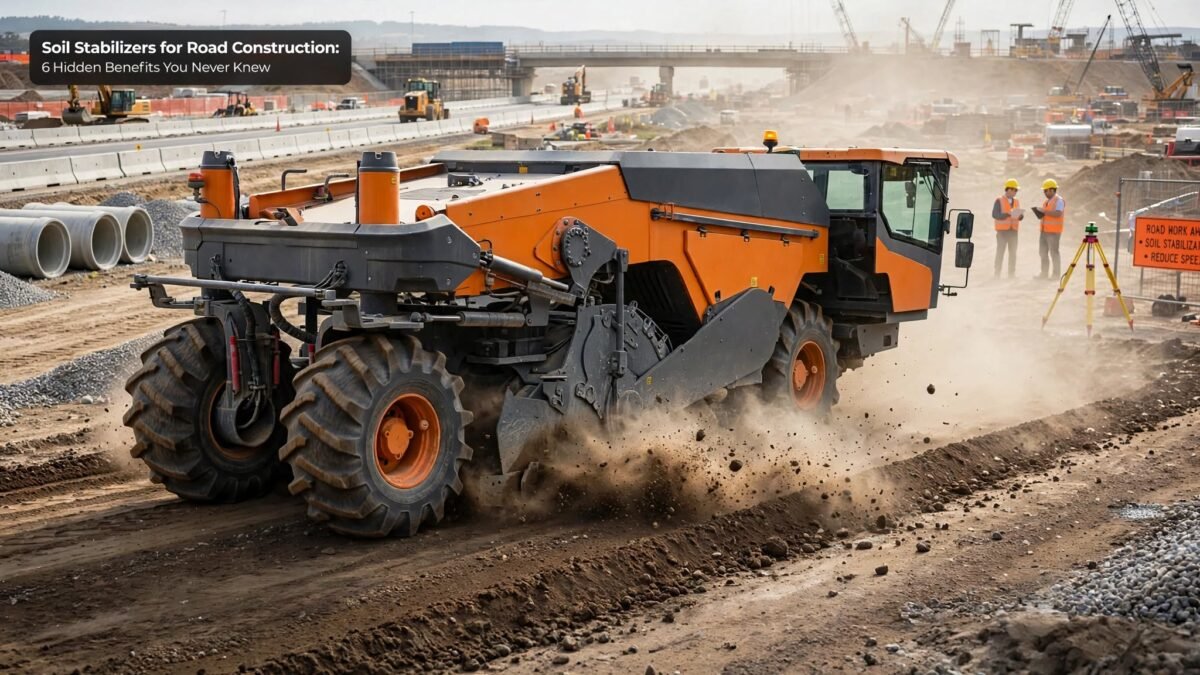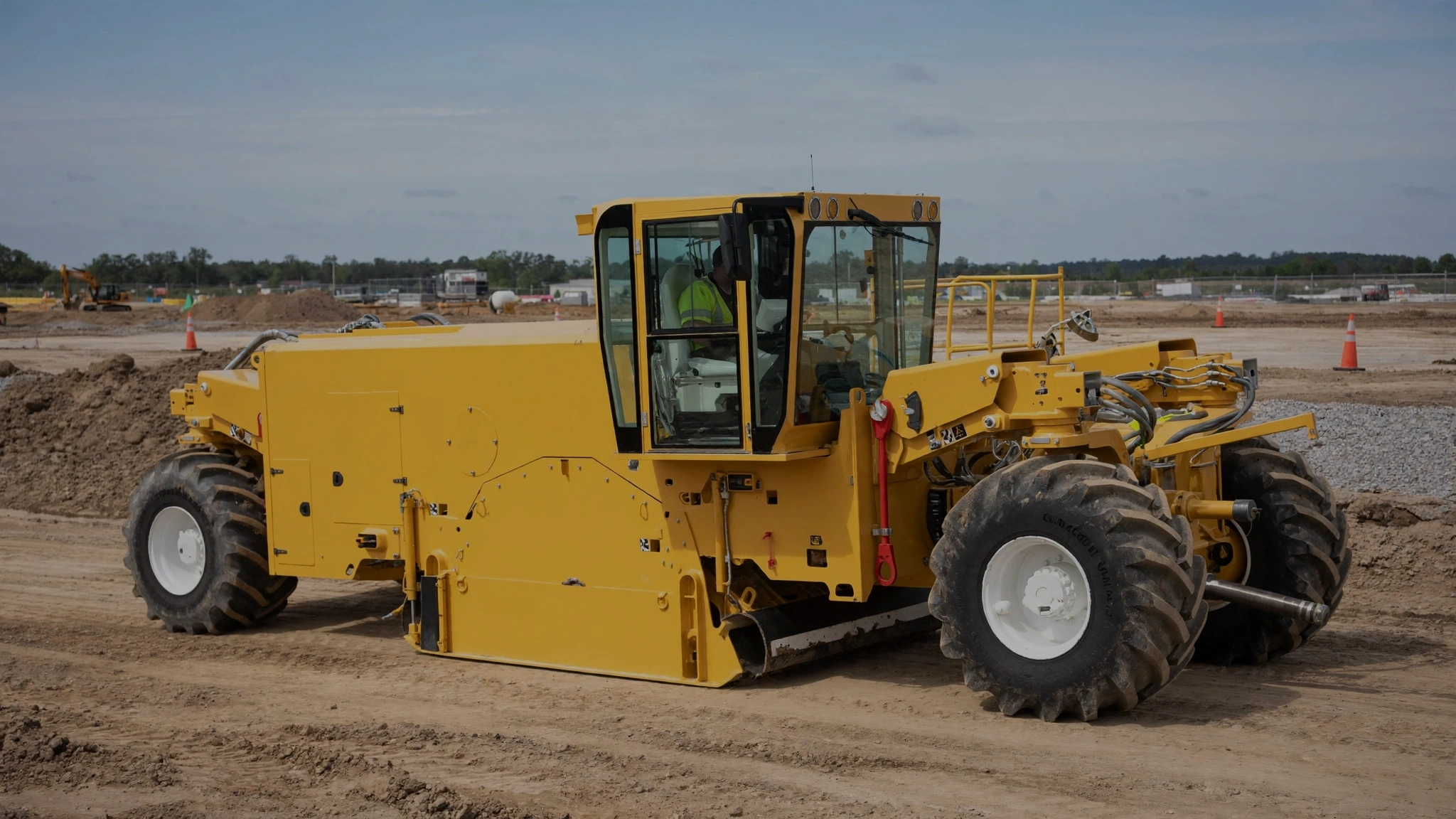
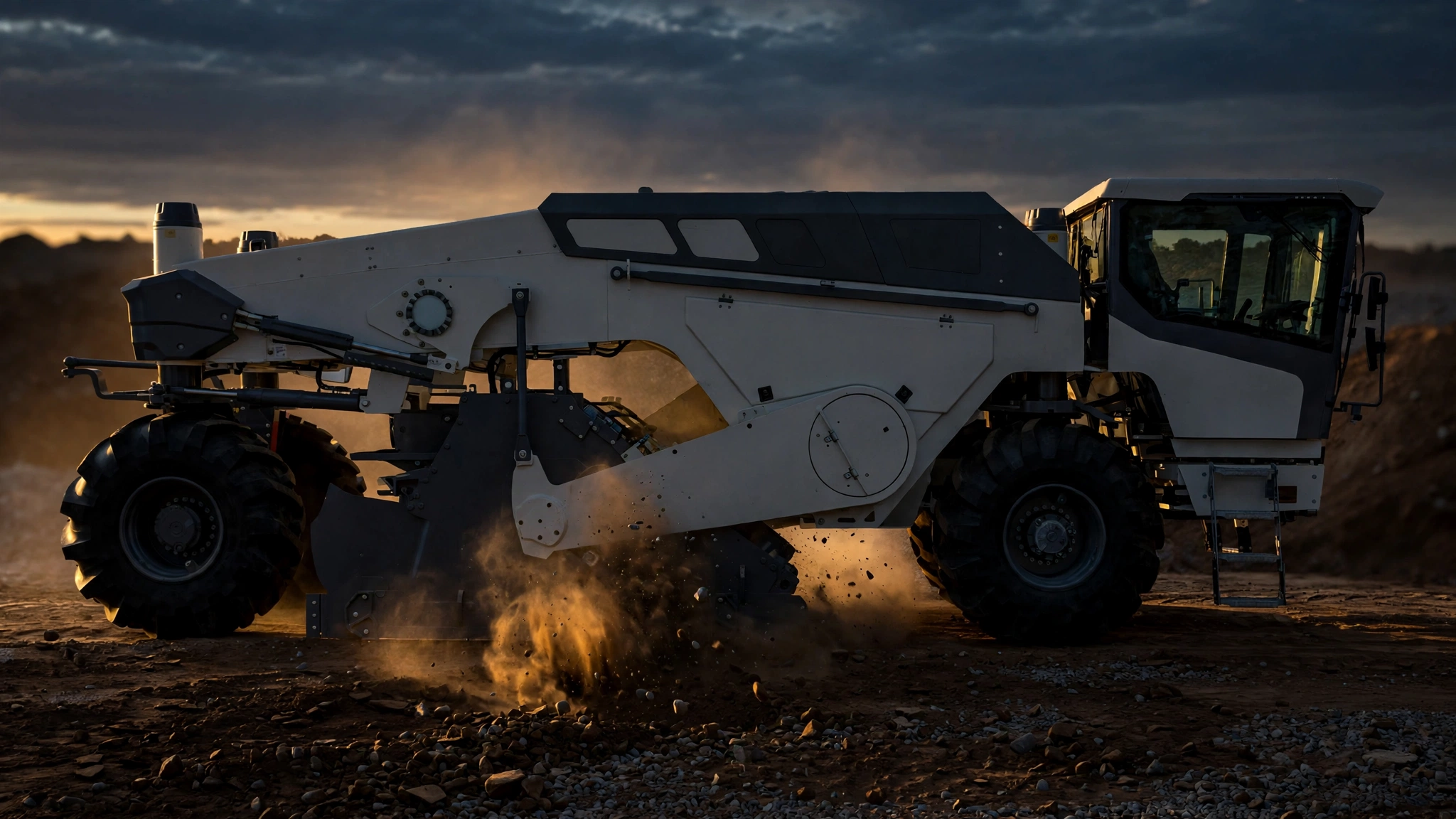
Heavy-Duty Soil Stabilization Machinery
Purpose-built machines engineered to blend and condition soil for long-term structural stability.
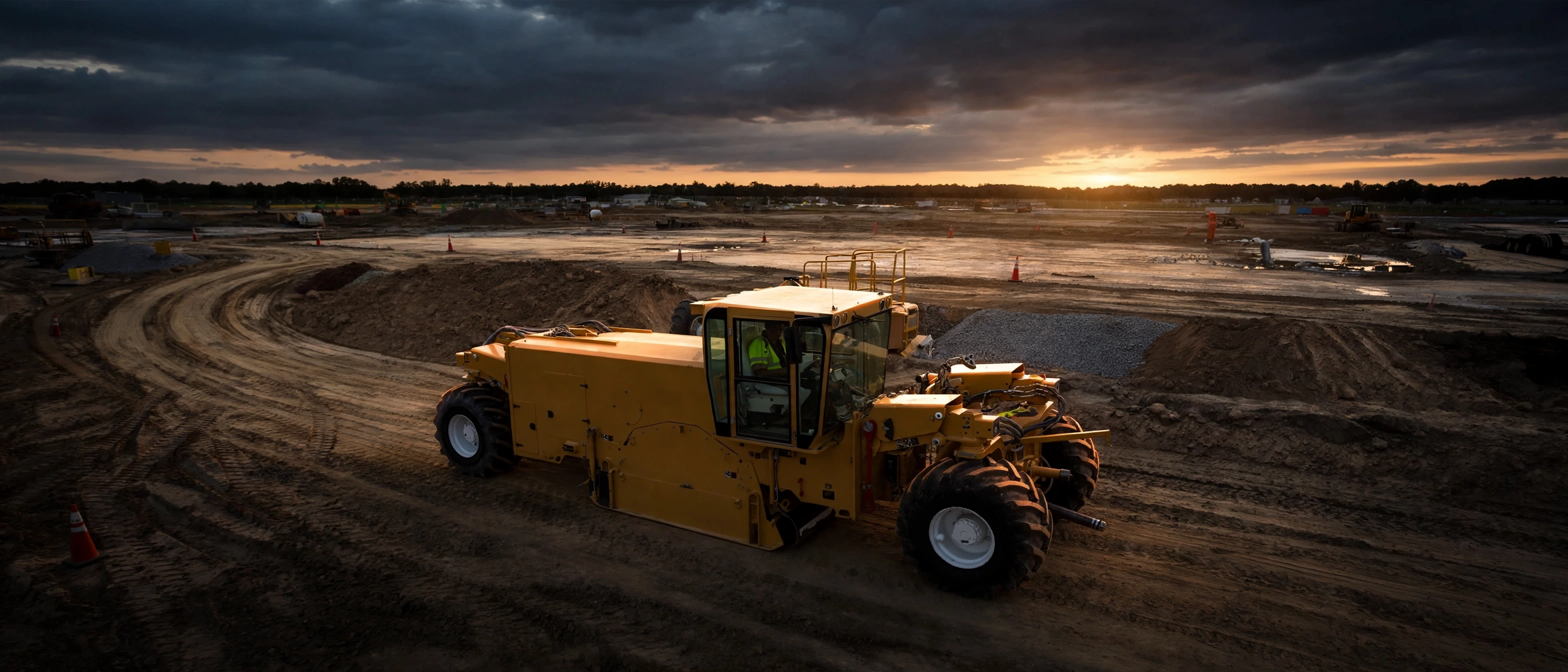
Precision-Engineered for Job Site Performance
Operated with close control over depth, speed, and mixing consistency across varying soil conditions.
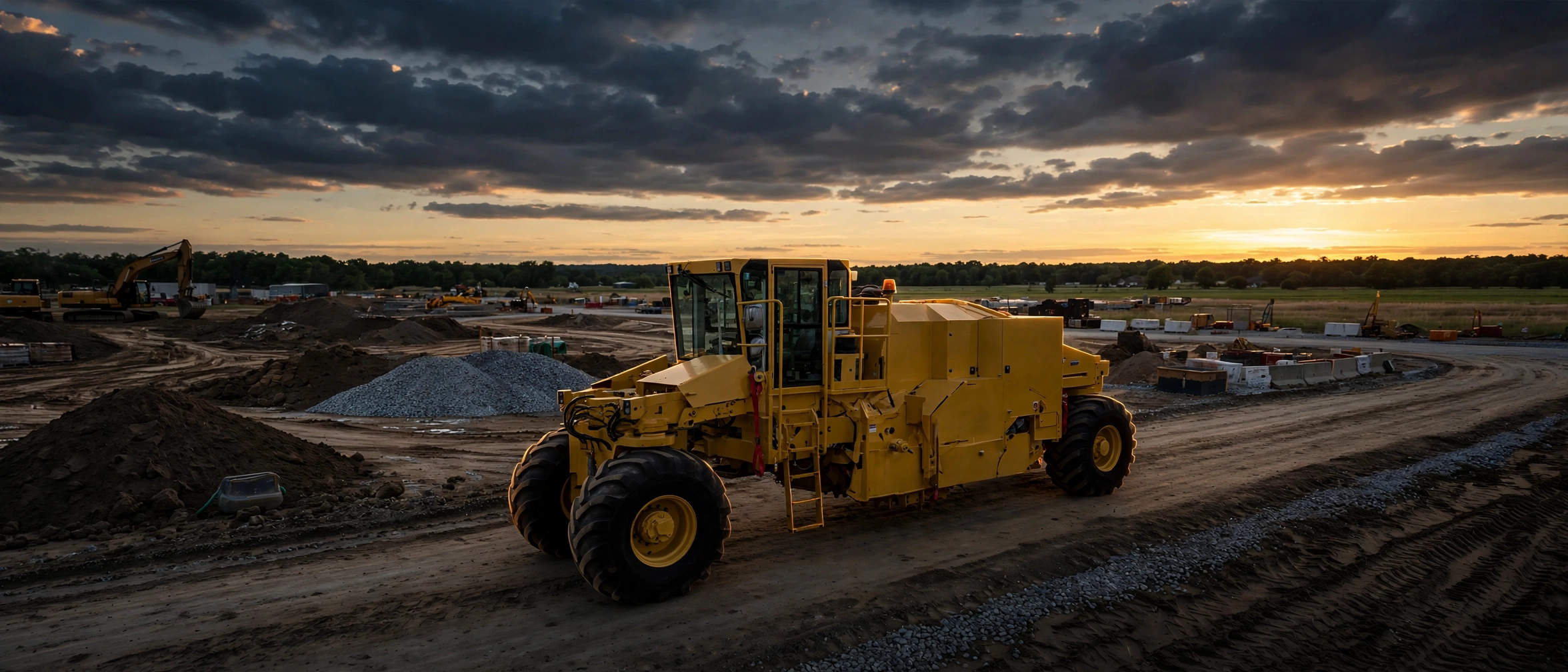
Advanced Mixing and Reclamation Technology
High-torque rotors break down and blend material in a single pass, improving load-bearing capacity.
Inside a Soil Stabilizer
Tap the gold markers to see what each part does — and where it fits in the stabilization pass.
WHICH STABILIZATION EQUIPMENT FITS YOUR PROJECT
A side-by-side look at the primary machine categories used across soil stabilization projects — from compact site work to full highway-scale reconstruction.
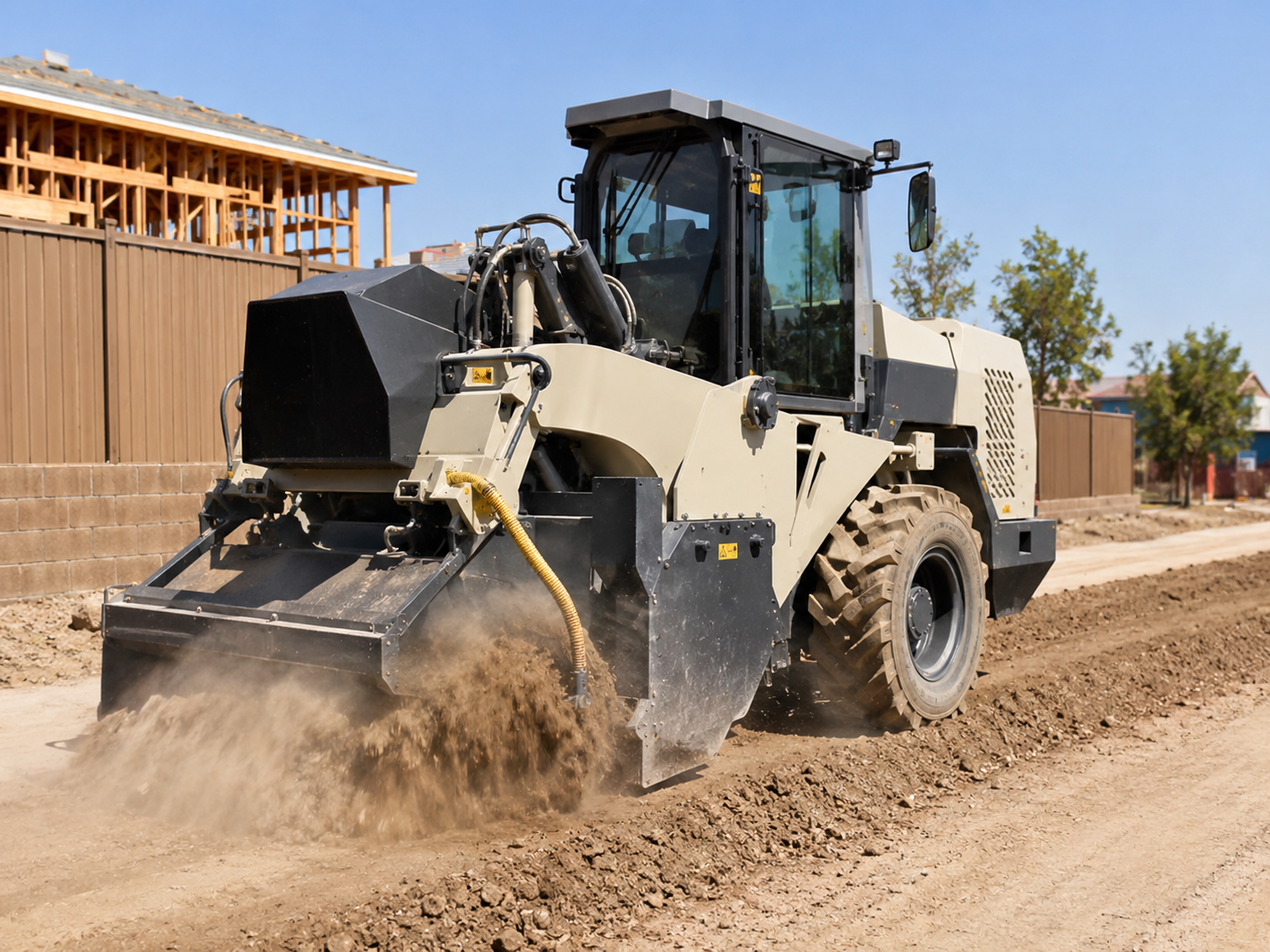
BEST FOR SMALL SITES
Compact Reclaimer
A smaller-footprint machine built for tight job sites, driveways, and local roads where maneuverability matters more than raw output.
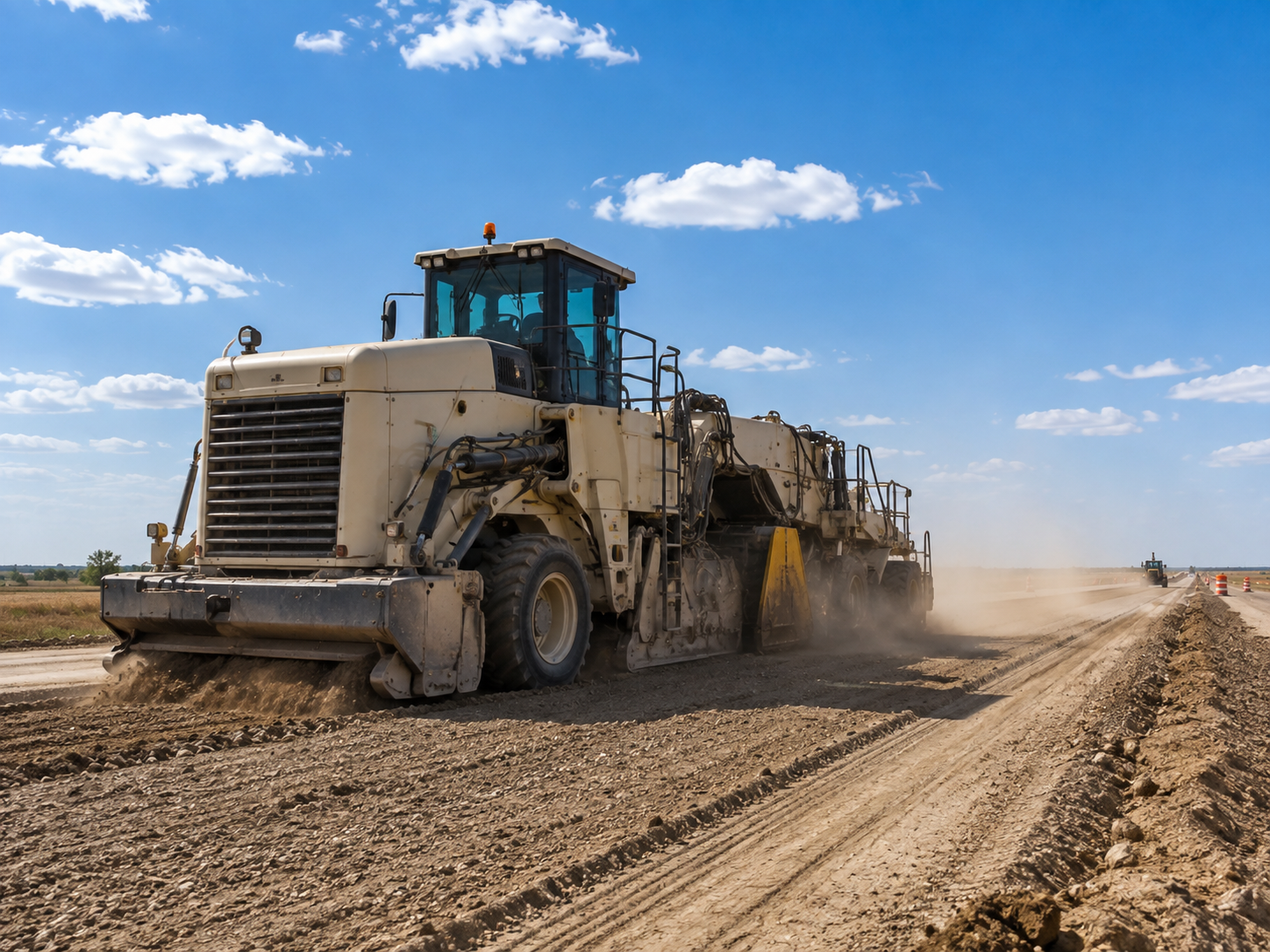
BEST FOR HIGHWAYS
Full-Size Road Reclaimer
A high-output machine engineered for large-scale base reconstruction, capable of mixing deeper and wider in a single pass across open corridors.
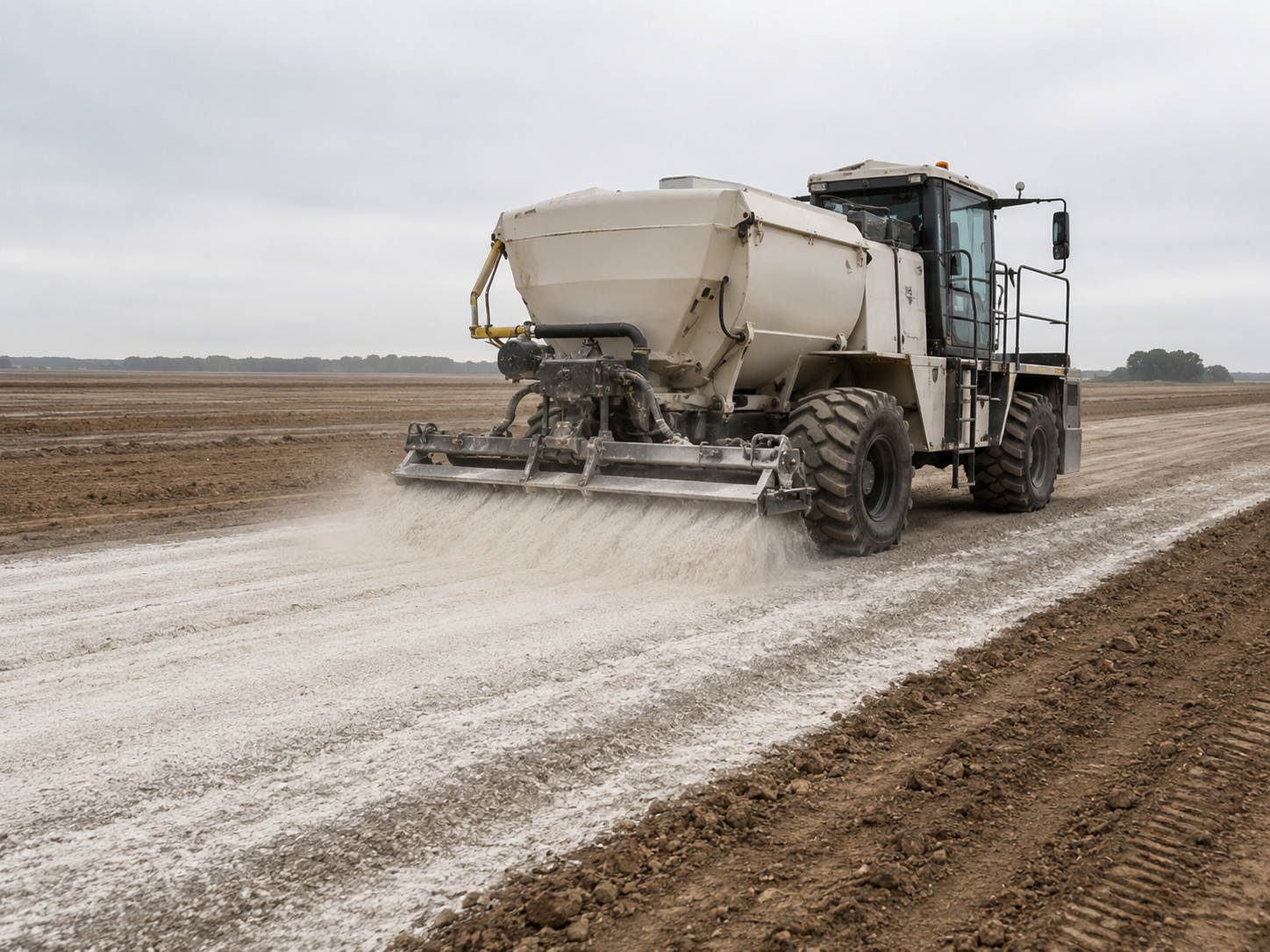
BEST FOR BINDER PREP
Chemical / Binder Spreader
Used ahead of mixing equipment to distribute cement, lime, or fly ash evenly across the surface, ensuring consistent binder ratios before reclaiming begins.
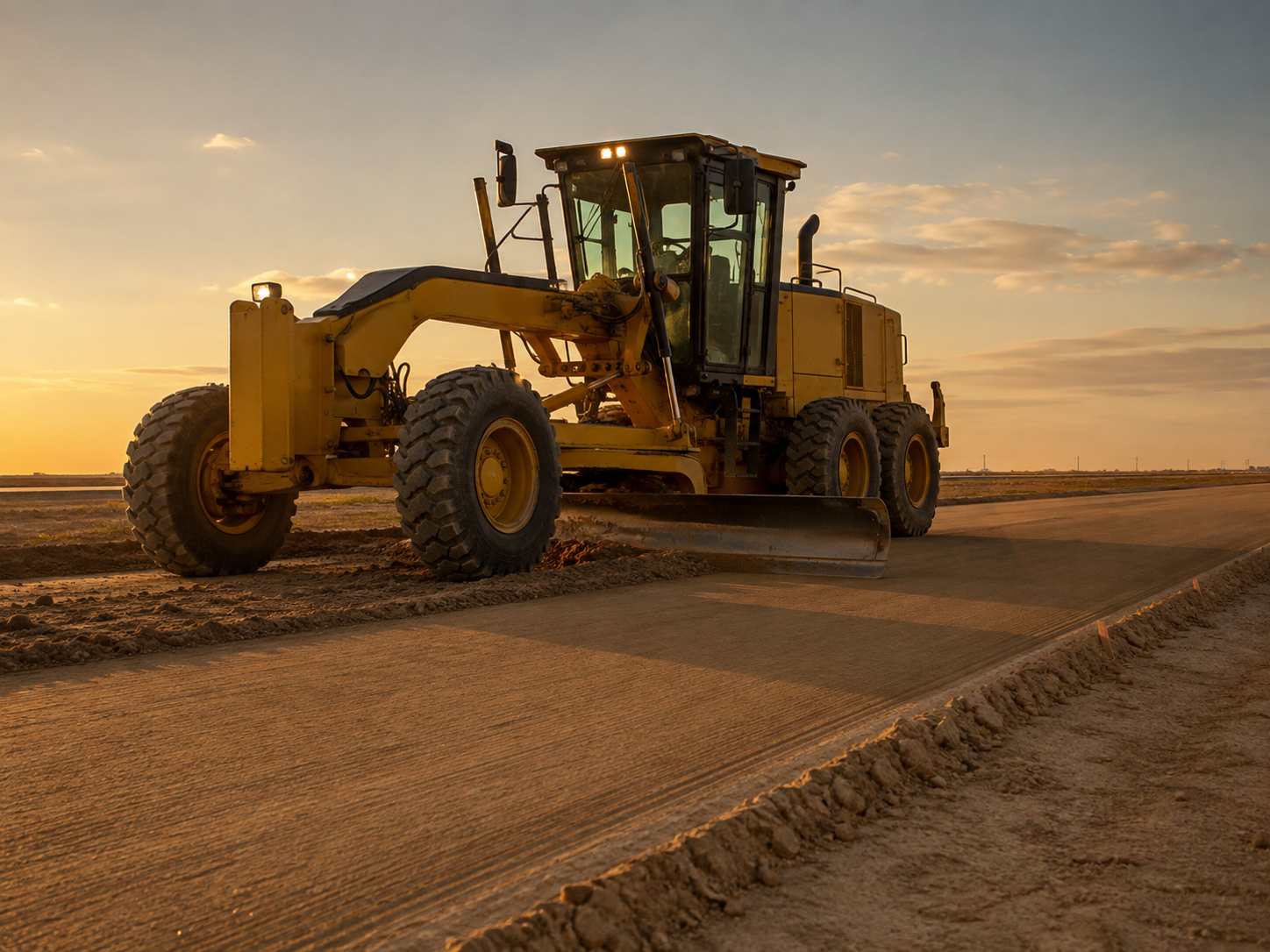
BEST FOR FINISHING
Motor Grader
Deployed after mixing and compaction to level the treated surface, establishing the correct grade, crown, and cross-slope for the finished base layer.
Specifications above are general industry reference ranges and vary by manufacturer and model.
WELCOME
UNDERSTANDING MODERN SOIL STABILIZATION TECHNOLOGY
Soil stabilizers are specialized machines used to improve the engineering properties of soil for road construction, foundation work, and infrastructure development. By blending binding agents such as cement, lime, or fly ash directly into the soil, these machines increase load-bearing capacity, reduce moisture sensitivity, and create a durable base layer suitable for heavy construction. Stabilization equipment ranges from compact reclaimers used on smaller sites to large-scale road recyclers deployed on highway projects.
Soil stabilization methods compared
Six ways to stabilize soil, side by side on soil match, binder rate, cure time, load-bearing gain, cost, and durability.
| Method | Best soil type | Binder rate | Cure time | Load-bearing gain | Cost | Durability |
|---|---|---|---|---|---|---|
| Mechanical | Granular, mixed gradations | None, blend & compact | Ready when compacted | |||
| Cement | Sandy, low-plasticity | 4 to 8% by weight | About 7 days | |||
| Lime | Clay, high-plasticity | 3 to 6% by weight | 7 to 14 days | |||
| Fly Ash | Silty, low-cohesion | 10 to 15% by weight | About 7 days | |||
| Bitumen | Sandy, low-fines | 4 to 8% by weight | 1 to 2 days | |||
| Chemical-Polymer | Broad, product-specific | Low dose, per product | Hours to 2 days |
Gold: load-bearing gain & durability (higher is better) Charcoal: cost (higher is pricier)
Figures are typical ranges. Confirm binder type and dosage with soil testing and a project mix design.
EQUIPMENT CATEGORIES
An overview of the primary machine types used in soil stabilization work
Reclaimers / Stabilizers
Mix binding agents directly into existing soil or road base to increase strength and durability.
Compaction Rollers
Apply controlled pressure to densify treated soil layers and achieve target compaction levels.
Chemical / Binder Spreaders
Distribute cement, lime, or fly ash evenly across the work area prior to mixing.
Motor Graders
Level and finish the stabilized surface to achieve the required grade and cross-slope.
WHAT TO KNOW
UNDERSTANDING EQUIPMENT, SAFETY, AND SITE PRACTICES
From raw ground to load-ready base
Click a pass — or press play — and watch the machine work the strip from native soil to an engineered base layer.
Test soil
Sample and classify the ground. Plasticity, moisture, and gradation set the binder and the dose.
Because stabilization treats soil directly on-site, there is less need to excavate, haul away, and import replacement material — reducing truck trips and disruption compared to traditional excavation-based methods.
Stabilization methods are applied across a wide range of soil types and climate conditions worldwide, from dry arid regions to areas with high moisture content, with binder selection adjusted accordingly.
From raw ground to load-ready base
Six controlled passes turn native soil into a durable, engineered base layer, all in a single stabilization run.
-
01
Test soil
Sample and classify the ground. Plasticity, moisture, and gradation set the binder and the dose.
-
02
Spread binder
Meter cement, lime, or fly ash evenly across the graded surface at the design rate.
-
03
Mix in single pass
A high-torque rotor cuts, pulverizes, and blends binder through the full depth in one pass.
-
04
Compact
Roll the treated layer to target density while the moisture is right for the tightest bond.
-
05
Grade
Trim to line and level, then give a final roll for a smooth, uniform surface.
-
06
Cure
Hold moisture and let strength build. Traffic or paving follows once the layer sets.
LATEST
ARTICLES
READ OUR ARTICLESSoil Stabilizers for Road Construction: 6 Hidden Benefits You Never Knew
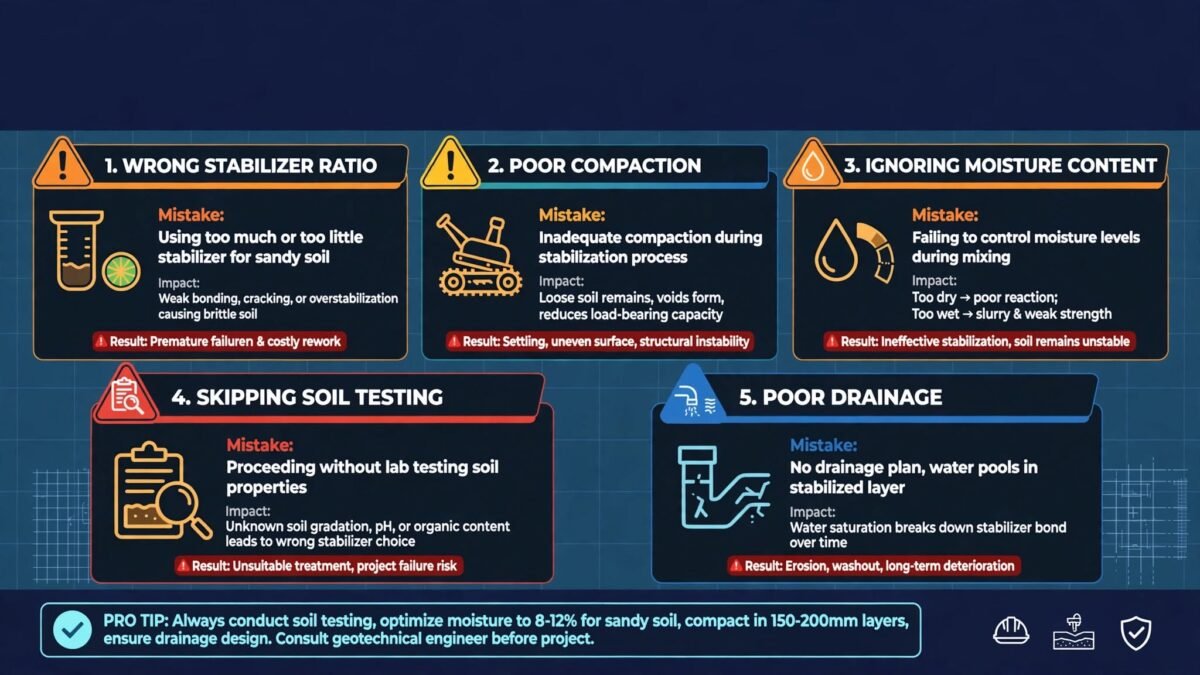
Soil Stabilizers for Sandy Soil: 5 Critical Mistakes That Ruin Your Project
QUICK EQUIPMENT COMPARISON
A general reference comparing common soil stabilizer configurations
| Category | Compact Reclaimer | Full-Size Road Reclaimer | Chemical Spreader Unit |
|---|---|---|---|
| Typical Working Width | 1.0 – 1.5 m | 2.2 – 2.5 m | 2.0 – 3.0 m |
| Common Use | Small sites, driveways, local roads | Highways, large-scale base reconstruction | Pre-mixing binder distribution |
| Mixing Depth | Up to 30 cm | Up to 50 cm | N/A (surface application) |
| Binder Compatibility | Cement, lime | Cement, lime, fly ash | Cement, lime, fly ash |
| Site Type | Confined / smaller footprint | Open, high-volume corridors | Any (used ahead of mixing units) |
Figures are general industry reference ranges and vary by manufacturer and model.

Building Foundations That Last
Properly stabilized soil forms a dense, moisture-resistant base layer that resists rutting, settlement, and seasonal shifting — extending the service life of roads, foundations, and infrastructure built above it.
Stabilize in place, or dig it out?
The same base, two ways to build it. Here is how in-place stabilization stacks up against remove-and-replace on the five things that decide a job.
Stabilization
Treat the soil in placeRemove & Replace
Dig out, haul, import fillUp to 50% less. Reuses the soil already on site.
Higher. Haul-off plus imported fill and aggregate.
Days. One machine, one pass, minimal staging.
Weeks. Excavate, haul, import, rebuild in lifts.
Few. Little material leaves or enters the site.
Hundreds. Constant haul-off and import loads.
Low. Work stays inside the project footprint.
High. Open pits, dust, and heavy road traffic.
Lower. Less hauling and less new aggregate.
Higher. Trucking miles plus quarried material.
The verdict: in-place stabilization wins on cost, speed, traffic, and carbon. Remove-and-replace earns its keep only when the soil truly cannot be treated.
Estimate your project →Comparisons are directional and vary with soil type, depth, and haul distance. Run your own numbers in the estimator.